
We got a big kick out of this story, which emerged out of the Callais v. Louisiana case…
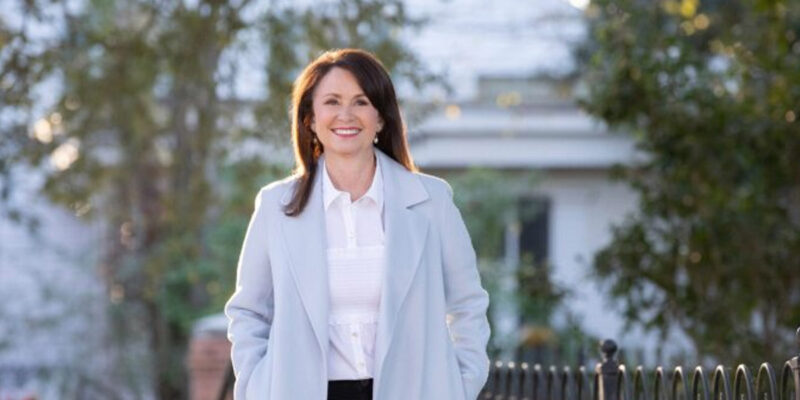
A 19th JDC judge dismissed the Louisiana Legislative Black Caucus’s (LLBC) order to relieve Attorney General Liz Murrill from a strict defense of the statute that created a second Black-majority district.
On Monday, Judge Eboni Rose-Johnson granted the exceptions from Murrill and dismissed the writ of mandamus.
“This was the proper result. Our focus is on arguments in the United States Supreme Court and addressing the flaws in the court’s jurisprudence that deprive the Legislature of its constitutional duty over drawing maps,” said Murrill.
On Sept. 5, the LLBC sued Murrill, claiming she overstepped her authority in a case about the state’s congressional map. They argued that under Louisiana law, only the Legislature had the power to enact or suspend laws, and the attorney general’s duty is to defend them.
In 2024, lawmakers approved Act 2 after a federal court said that an earlier map likely weakened Black voting strength, violating the Voting Rights Act. According to the lawsuit, Murrill defended Act 2 in court and called it a “controversy-less matter.” But more recently, she changed her mind and argued that the map was unconstitutional.
There’s a glaring error at the end of this thing which needs to be addressed first, of course, which is that Liz Murrill didn’t “change her mind” about Louisiana’s 4-2 congressional map’s constitutionality. The Attorney General’s office, charged with defending that map in court against a constitutional challenge on 14th Amendment Equal Protection grounds, argued that it doesn’t violate the Equal Protection clause.
But then the Supreme Court asked for briefs and arguments on the constitutionality of Section 2 of the Voting Rights Act when they decided to punt the Callais case to the current term, and there will be oral arguments on that question a week from now.
Murrill’s answer is to a different question. And there is nothing inconsistent for Louisiana’s Attorney General, arguing the state’s position on the question of Section 2 of the Voting Rights Act which essentially mandates racially-gerrymandered affirmative-action districts for black Democrat politicians, that it’s unworkable as a constitutional proposition.
As Murrill argues – as does Gov. Jeff Landry in the amicus brief he filed in the case, Louisiana is one of several states being continuously whipsawed between Equal Protection lawsuits and Section 2 lawsuits each time the legislature draws districts, and it’s absolutely natural for Liz Murrill, asked by the Supreme Court to weigh in on whether Section 2 can be complied with without open racial gerrymandering which lands Louisiana in court all the same, to say that the answer is no.
Now – Eboni Rose-Johnson, who is black, which matters only in the ironic sense here, doesn’t have a reputation as a particularly skilled jurist, and her dismissal of the Black Caucus’ attempts to get Murrill tossed from the state’s legal team probably doesn’t arise from any of the nuance explained above. More likely, Rose-Johnson, who’s been suspended by the Louisiana Supreme Court for making uncommonly bad rulings from her bench, took one look at the Black Caucus’ petition and said, “Hell, no, I’m not gonna put my head in that guillotine.”
It’s an absurd ask. The Legislative Black Caucus thinks it has the constitutional right to dictate Louisiana’s legal policy over the head of the statewide elected officials our voters overwhelmingly put in office? Where do these cretins get off?
What this desperation move signals is the fact that the pieces are all moving in the direction of Section 2 getting thrown out by the Supreme Court in the Callais case. And that is a real problem for the Black Caucus, because without the threat of lawsuits forcing the state legislature to carve out favorable districts, some number of them will be faced with having to appeal to more than just black voters in the next election (or the one after that).
And a lot of the rhetoric these guys have been embracing for a long time will make for a political dead end with the broader community of voters.
Like Cleo Fields said, perhaps just before he made a fortune on insider-trading in Oracle stock shortly before the TikTok announcement, something he can do as a member of Congress made possible solely because of Section 2 and the state’s attempts to comply with it, black Democrats in Louisiana really struggle to get white votes.
Kip Holden and Sharon Weston Broome, who won election as Baton Rouge’s mayor-president with significant white votes running as centrists, notwithstanding.
The problem these guys have is that they’re fringe politicians who make fringe arguments. It’s not the color of their skin.
Eventually, Louisiana is going to develop a John James or Byron Donalds or Tim Scott. It’s a shame we haven’t already. When one does arise, and people see that it’s possible for a black conservative to get elected in Louisiana (it is; we just haven’t seen it materialize as it has in most other Southern states), any shred of a victimization-culture argument the Black Caucus might try to bring will evaporate.
And we took a step in that direction yesterday in Rose-Johnson’s court. Which was fun to see.
Advertisement
Advertisement
