
Louisiana is finally winning big. A flurry of major economic development projects bodes well for the state’s future. After years of status quo policies that led to outmigration as our best and brightest left to find opportunities elsewhere, we may at last have turned a corner.
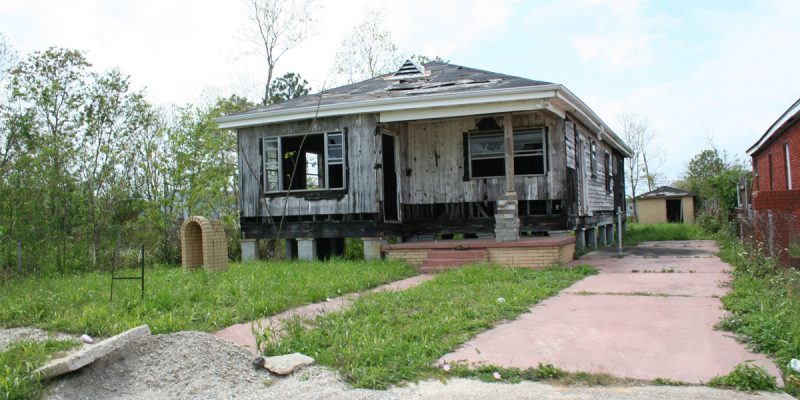
Unfortunately, this success comes with a serious problem. Louisiana has long been defined by high poverty and an undereducated workforce—conditions most concentrated in our major cities. These dense urban cores face overwhelming social ills rooted in poverty and failed education systems, compounded by leaders who too often lack vision and instead pander to political passions.
So, what does that have to do with our recent economic wins? The answer lies just beneath the surface. Look closely at the announced projects and you’ll find that little—perhaps none—of the major economic benefit is located in our cities. Instead, investment is flowing to lower-population areas far from urban centers. While this is good news for the state overall, it offers little relief to those who need it most.
This outcome is not the result of state indifference. Businesses go where they can reasonably expect to make profits and where those profits are secure from excessive taxation, corruption, and predatory litigation. Modern American cities have become hostile to those fundamentals, and Louisiana’s cities are no exception.
I have long argued that the only durable solution to our urban social ills is a commitment to policies grounded in the proven principle that a rising tide lifts all boats. My frustration comes from living in a state rich in assets and a city that was once a boomtown, yet neither seems capable of fully joining the broader Southern economic resurgence.
If Louisiana’s cities are to participate in a long-hoped-for revival, they must adopt pro-growth policies and abandon an adversarial posture toward state government. The political reality is clear: Republicans control the state, Democrats control the cities, state leaders especially the governor are not beholden to city voters. That balance is unlikely to change. Cities desperately need economic growth, and that requires working within this reality rather than railing against it.
City and state leaders must find ways to collaborate on policies that meet the basic needs of business. That means bridging local politics, engaging constructively with state leadership, and jointly dismantling the obstacles created by decades of Louisiana populism and city-level political dysfunction. City leaders cannot be content merely to beg for loans or subsidies; they must help design fiscal and regulatory structures that work for everyone—including the businesses we hope to attract.
Unfortunately, such cooperation has been an exception rather than the rule. City leaders, even while presiding over widespread poverty, pander to voters by promising protection from “state intrusion.” Meanwhile, state leaders pander by warning voters about creeping socialism and corruption emanating from cities. The status quo result can only be paralysis.
From 30,000 feet, the arbitrary boundaries that define cities disappear. They are political constructs that may protect local fiefdoms but have failed the citizens who live within them. City leaders must accept this reality and build bridges—to the state, to surrounding regions, and especially to the governor. There will always be parochialism in state government but managing it is the governor’s job. Constant attacks on him only guarantee exclusion from the table.
The state, in its turn, must accept that citizens of the cities are, at the most fundamental level, citizens of the state. When and if cities seek reasonable representation at the policy table, they must be afforded that. Of course, the reverse is also true and when a city fails its own people the state shouldn’t turn a blind eye, but must step in.
If cities are to share in the prosperity coming to Louisiana, their leaders and state leaders must suppress ideological impulses and engage seriously in the state’s economic strategy. No business is obligated to locate in New Orleans, Shreveport, or Baton Rouge, or in fact in Louisiana. Companies will come only if they can make a profit and keep it. That requires reform at every level of government, something impossible when ego and local politics dominate.
One final point: buying jobs through government “investments” or tax rebates should be a last resort. Fix state and city government so they are genuinely attractive to business, and we can end the scourge of crony capitalism altogether.
Advertisement
Advertisement
