
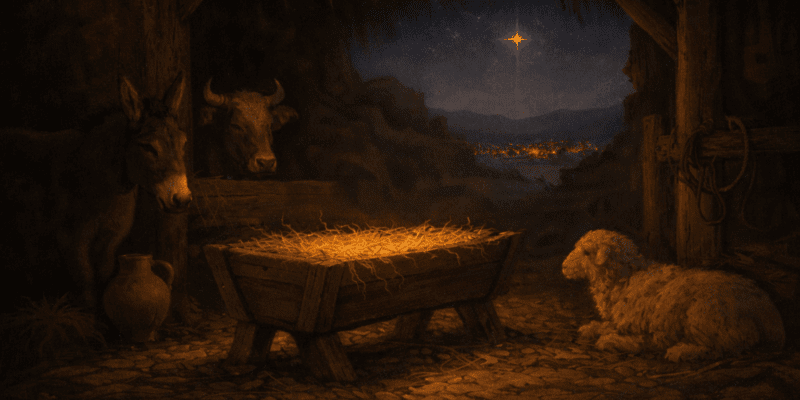
Terror attacks, information warfare, psyops, and the predictable push for tighter hate-speech laws–it all illustrates a world frantically seeking security through human solutions. This, even as the remnant Church stands in Advent, waiting for the babe, the only King, who truly conquers hatred and disorder.
It’s not even really a “wake of events thing” anymore. The psyops are never-ending, whether they be obvious and Facebook ready or quiet and slithery as a snake. Time and time again, we see stories emerging from electronic screens of governments yet again reaching for the familiar “gifts” of expanded surveillance, heightened policing, and the promise that new legal definitions of “hate” will finally produce peace. And this doesn’t have to do with just one group–the false binary wars are never-ending.
The impulse would have been understandable maybe before 2020. But we should have learned some invaluable lessons in the last six years. Fear always seeks control. Fear is always loud. Fear is always sure of itself but never includes the only Truth that matters. History–and theology–teach us that disorder cannot be cured by management alone, nor can peace be engineered where the heart itself remains disordered.
This is why timing matters in framing this whole stage play in a certain way.
For the remnant Church, Advent is not a sentimental prelude to cultural celebration, nor a season of vague goodwill. It is a period of watchful expectancy, a sober waiting for the arrival of an Infant King whose reign does not begin with legislation but with conversion. While the modern world attempts to suppress hatred through law, the babe in the manger confronts its deeper cause by demanding right order in the soul.
Modernism resists this logic. It prefers self-help and therapeutic language to moral clarity, legislative solutions to personal renunciation, and executive enforcement to repentance. In such a framework, security becomes the highest good, and obedience to God is quietly reframed as an obstacle to social harmony rather than its foundation.
It is unity. It is brotherhood. It is synodality.
But it is the wrong kind.
And if we don’t push back it will crush true Christians one day.
This is precisely the condition we have trained ourselves to accept. As I wrote previously, we have learned to live inside the cave–to mistake the glow of screens for light, the repetition of official narratives for truth, and managed outrage for moral seriousness. Psyops still shock us, at least the obvious ones, but they only shock us to squabble online. And we certainly don’t pay enough attention to recognize the general pattern of deception inside the less splashy stories. We do not rebel against the shadows on the wall, no matter their size, because they feel familiar, and familiarity masquerades as safety–even when that safety involves the very evil we rail against online.
It really is a most insidious form of schizophrenia.
In such an environment, the soul grows accustomed to reacting rather than discerning, consuming rather than repenting. The sin is not merely falling for the deception, but finding comfort within the deception.
Advertisement
Peace without justice is merely an agreement to tolerate disorder. True peace begins only when the soul is rightly ordered toward God. St John Chrysostom pressed the point further, insisting that the Church preserves the world not by appeasing it, but by stinging it–like salt applied to corruption. Where that sting is removed in the name of harmony, brotherhood, unity, synodality–decay accelerates rather than recedes.
And at some point all Catholics should be asking the same questions that so many of us are already.
Christ never offered safety as the price of discipleship. He offered peace, which is something altogether different. Peace emerges not from the silencing of speech or the expansion of authority, but from loves rightly ordered–when God is placed above tribe, family, nation, and even self.
Peace, therefore, must come with the Cross. It must come this Advent season with a cold manger in a stable.
Advent exposes the poverty of purely human solutions precisely because it announces a Kingdom that cannot be built from the top down. As we await the Infant King, the remnant Church quietly insists on an uncomfortable truth: no society can be healed unless hearts are first surrendered, and no lasting order can exist where Christ does not reign.
That waiting, though costly, remains our hope.
Advertisement
Advertisement
