
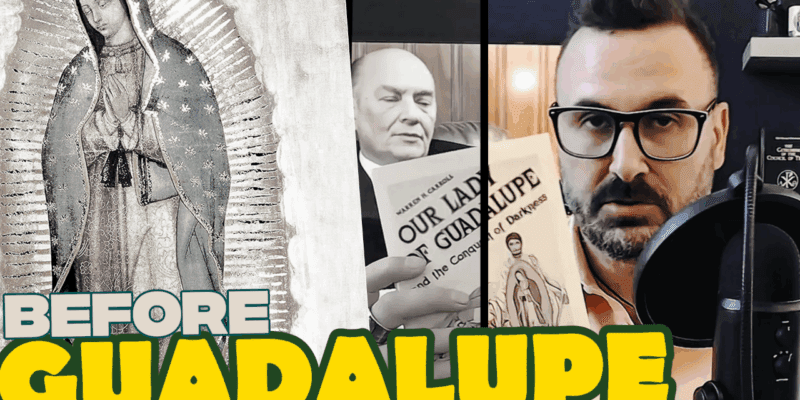
In 1487–just five years before Columbus sailed and a few decades before Luther’s revolt against the Old Faith–two worlds were already moving toward a collision neither could have foreseen.
It is the bones of Biblical poetry, the marrow of the mind of God.
*This is not suitable listening for children.*
In Spain, King Ferdinand and Queen Isabella were fighting the final battles of an eight-century war to reclaim their homeland for Christ. Their nation was sharpening itself into a Catholic civilization, convinced that the Cross was meant to travel further than Europe’s shores.
It is, after all, what Christ commanded in the Great Commission.
Across the ocean, the Aztec Empire was far from worshipping Christ. They worshipped something entirely different–dedicating their great temple in Tenochtitlán with rivers of human blood, tens of thousands sacrificed in mere days.
And this wasn’t exceptional.
This was annual.
This was everywhere.
This was 1487.
Two rulers. Two kingdoms. Two altars.
One offered bread and wine transformed into the Body and Blood of Christ.
The other offered beating human hearts to demons.
This lesson steps back into that single year–1487–to show how Heaven was already preparing a miracle in the form of a young child named Hernán Cortés. A providence would unfold: The rough yet deeply pious Cortés would one day shatter the empire of sacrifice, paving the way for the appearance of Our Lady of Guadalupe and the conversion of millions who once had no hope they would ever be rescued from the devil.
History is not chaos. It is choreography. And it is beautiful.
Sometimes, if you look closely enough, you can see the divine hand at work.
Advertisement
Advertisement
