
Louisiana’s Gulf economy got a piece of great news last fall, when Energy Secretary Chris Wright granted final approval to a major Louisiana liquified natural gas (LNG) company to begin exporting to most countries around the world. After years of destructive Biden-era energy policies – including a now-repealed moratorium on LNG exports – this Department of Energy (DOE) approval marked a much-needed change for Louisiana and promised to reinvigorate the state’s economy. However, a few hurdles remain to realizing the full potential of these recent encouraging developments.
In 2024, a major legal ruling created uncertainty for every oil and gas operator in the Gulf. A federal judge in Maryland struck downthe 2020 biological opinion—known as a “BiOp”—that the National Marine Fisheries Service (NMFS) uses to evaluate whether offshore activities harm protected marine species. This document is required under the Endangered Species Act and serves as the scientific and legal foundation for all Gulf oil and gas operations. When it was thrown out, Louisiana’s energy sector was suddenly left without the regulatory roadmap it relies on to keep projects moving.
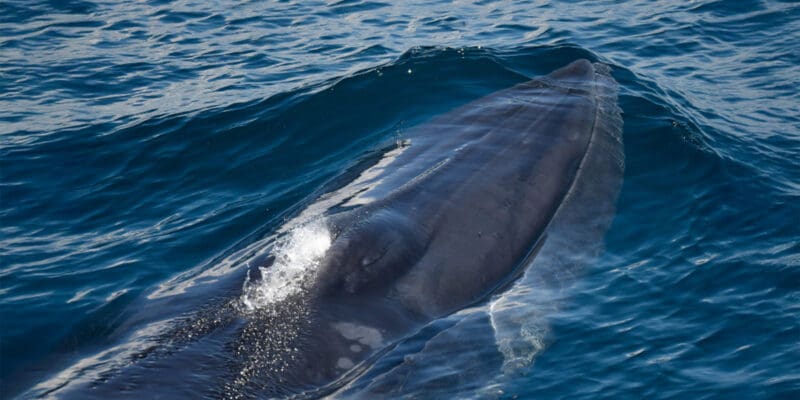
The court ordered NMFS to issue a replacement BiOp by May of last year, which the agency did. But instead of providing clarity, the new BiOp created even more confusion. In it, NMFS issued what is called a “jeopardy finding,” suggesting that offshore vessels might theoretically pose a risk to Rice’s whales—a species primarily found outside areas of the Gulf where Louisiana’s energy production occurs. That single finding has opened the door for environmental groups to halt all offshore drilling by launching a series of lawsuits.
What’s most troubling is the lack of real-world evidence to support this conclusion. After decades of offshore activity in the Gulf, there are no documented cases of oil or gas vessels striking or killing a Rice’s whale. NMFS itself even concluded this year that oil and gas activities “will not jeopardize the continued existence” of any other listed protected species or adversely modify critical habitats. Yet for the Rice’s whale, the agency leaned heavily on hypothetical models and worst-case assumptions rather than the best available scientific data.
The result is a regulatory opinion built on speculation instead of demonstrated risk—one that now threatens to slow or restrict Louisiana’s offshore economy based on something that has not happened in practice. And given the fact that the Pelican state is an oil and natural gas powerhouse, that is precisely why misguided federal decisions like this matter.
Last year, the state ranked third highest in marketed natural gas production and seventh in proved natural gas reserves. As a whole, Louisiana’s energy industry supports 306,750 energy jobs, or 15% of the state’s total employment, as well as about a quarter of our state economy.
Offshore production is a major part of that success. Fourteen percent of all U.S. crude oil production and 2% of natural gas production come from the Gulf, and output is expected to grow. Thanks to technological advances and a more favorable regulatory environment under President Trump, the Energy Information Administration projects Gulf production will climb by 100,000 barrels per day to 1.89 million barrels per day in 2025—after falling last year under President Biden.
These gains are driven in part by newly required lease sales and more competitive royalty rates, but the BiOp problem underscores a broader challenge: America’s broken permitting system. While members of Congress are rightly focused on the lengthy timelines for approving new energy infrastructure, judicial delays from activist lawsuits only make the problem worse. These legal tactics weaponize the courts to stifle production, deepen our energy insecurity, and worsen the affordability crisis Louisiana families are already facing.
Fortunately, it appears that there is a renewed focus on permitting reform as Congress reconvenes in the new year. As lawmakers work to advance such measures, Louisiana’s representatives in Washington must also ensure that the NMFS’ new BiOp does not undermine their objectives by becoming a tool for frivolous litigation. Extreme environmental activists cannot be allowed to hijack the regulatory process and threaten the core of our state’s economy—nor the workers, families, and communities who depend on it.
Shane Comeaux is a public policy and energy expert from Lockport, Louisiana who previously worked in offshore drilling operations. The LSU alumnus splits his time between Louisiana and the Washington, D.C. area.
Advertisement
Advertisement
