
Louisiana is being sold carbon capture and storage (CCS) as “energy development”—new jobs, new investment, and another reason to trust the process. But citizens across this state are starting to see CCS for what it really is in Louisiana: not simply a technology, but a legal and political system designed to move quickly, reduce resistance, and expand control over private land and subsurface rights while calling it “progress.”
That’s why opposition is growing. Not because Louisiana suddenly became anti-oil and gas, and not because citizens are being manipulated into activism. It’s happening because Louisiana people recognize government overreach when they see it, and they don’t want it embedded into our laws and infrastructure for the next generation.
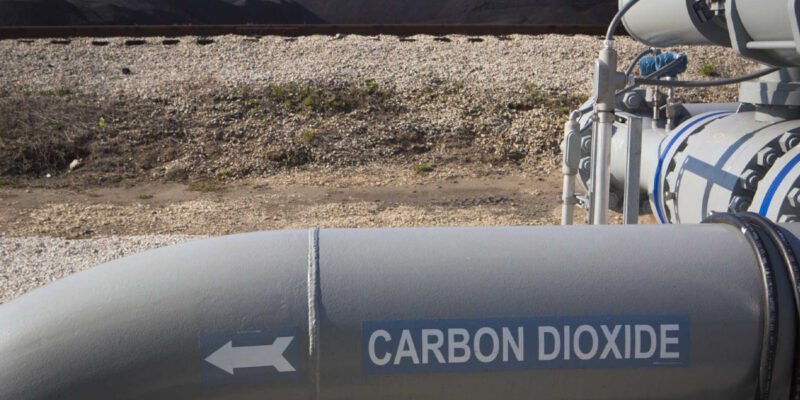
I support Louisiana’s energy economy. I always have. But CCS is not “business as usual.” It is being advanced through federal incentives, rushed timelines, and regulatory shortcuts that depend on one core assumption: landowners will accept the risk so someone else can collect the reward. CO₂ pipelines and injection infrastructure raise serious long-term questions—monitoring, liability, and public accountability—that cannot be brushed aside with political talking points.
In the 2025 session, I stood with State Representative Charles “Chuck” Owen—one of Louisiana’s most conservative Republicans—because I share his commitment to property rights, transparency, and constitutional government.
Conservatives have legitimate objections to CCS on principle alone. Many see it for what it is: climate politics repackaged to keep federal pressure and federal dollars flowing. But beyond that is a deeper issue that crosses party lines. CCS, as Louisiana is advancing it, collides with foundational values that used to matter in this state: property rights, local control, and transparency. Those are not optional in a free society.
If CCS is so safe, so beneficial, and so necessary, it should survive honest public scrutiny. But the public has watched a different pattern emerge. When citizens ask questions, they’re dismissed. When landowners organize, they’re labeled. When parish leaders resist, they’re pressured. And when the facts become inconvenient, the response too often isn’t debate—it’s character attacks.
You can see it parish by parish. Across Louisiana, local officials and citizens have raised reasonable concerns about CCS projects affecting their communities. Too often, they are treated like obstacles—told their authority is limited and their role is to accept decisions made elsewhere. That isn’t local control. That’s the public being pushed out of the process in their own backyard.
Here’s the truth: Louisiana citizens aren’t resisting CCS because they hate industry. They’re resisting because they’ve seen big projects sold with big promises and little accountability. They’ve watched the rules bend when the right interests want something done. And they understand a basic fact: if CCS requires less transparency, more shortcuts, and more power over private property to survive, then it doesn’t deserve public trust.
That’s why the messaging shifts the moment the public pushes back. Instead of answering real questions, critics reach for labels—“follow the money,” “outside influence,” “radicals.” That isn’t serious analysis. It’s a distraction. The real questions are simple: Why is this being rushed? Why is public input treated like a nuisance? Why does the process shrink when the consequences grow? If CCS is truly strong, it shouldn’t need smears to survive.
In 2025, some of the clearest leadership in Baton Rouge came from Louisiana Freedom Caucus legislators. They didn’t mince words. They defended landowners like conservatives are supposed to. My only complaint is simple: there aren’t enough of them. Louisiana doesn’t lack conservative voters. Louisiana lacks conservative follow-through inside the building.
Louisiana’s CCS fight isn’t left-wing. It’s Louisiana. It’s citizens demanding property rights that mean something, transparency that isn’t negotiable, and local control that isn’t mocked. If CCS is truly the future, it should survive honest debate. If it can’t survive transparency, it doesn’t deserve trust. And if it requires more power over private land to move forward, Louisiana citizens are right to say no.
Renee’ Savant is President of the Louisiana CO₂ Alliance and a Louisiana citizen advocate focused on landowner rights, public transparency, and constitutional government in the carbon capture and sequestration debate.
Advertisement
Advertisement
