
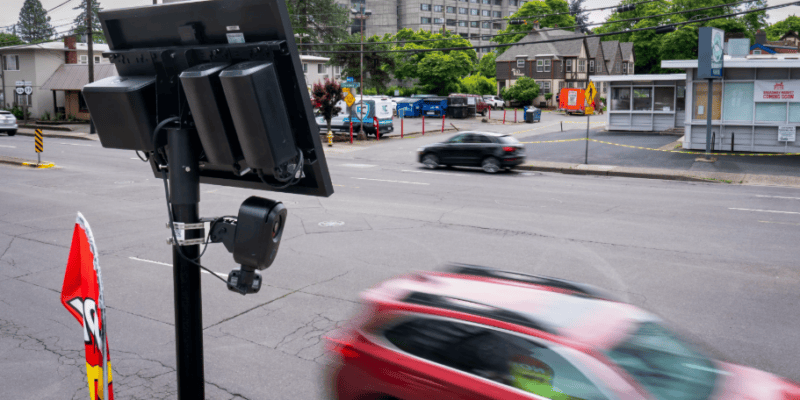
There’s no question that automated license plate reader cameras need increased scrutiny. The only question is how much.
Recently, Republican state Rep. Danny McCormick, through social media and on the airwaves, served notice that next year he would introduce a bill to ban such cameras. He declared that the Legislature had momentum to do so after it banned traffic enforcement cameras last year in all areas except school zones and the city of Opelousas. As well, the presence of reader cameras has irked privacy advocates worried that they have become another big-data source ripe for exploitation, if not a breeding ground for constitutional violations involving probable cause for searches.
However, he should expect some resistance. Law enforcement agencies have found the technology, which captures plate images that a private vendor collates into a database accessible to law enforcement, helpful in tracking down suspects, sometimes almost in real time, thereby improving apprehension and conviction rates. Simply put, this pits privacy rights against public safety.
To complicate matters, it’s not that cut and dry. Rogue government officials, from street-level law enforcement up to high-ranking elected officials, could use the database for illegal purposes (such as tracking an individual against whom someone has a vendetta) and/or political purposes (such as spying on people with associations or viewpoints opposed by the abuser). Some argue that the presence of such databases simply provides too much temptation for abuse, making it necessary to throw out the baby with the bathwater.
Yet surely all parties can attain a middle ground that allows camera use but sets strict limits. Several issues define the controversy.
Advertisement
First is the retention period, where the shorter the period, the less likely it is that privacy could be violated; among states that have legislated on the issue, periods presently range presently from three minutes to five years. Second is who keeps this data and how its use is limited, as storage by private firms makes it more likely that the information could be used for non-law-enforcement activities. Third, a warrant must be issued to place a vehicle on a list that generates an alert when its plate is read. Such a warrant should require probable cause that the vehicle is owned or operated by someone subject to an active arrest warrant or was involved in the commission of a felony. Fourth, to investigate more broadly, such as by checking vehicles identified near a crime scene, a warrant must include strict limitations on both the geographic area and the time period. Finally, audit trails of searches must be made available to defendants, along with the opportunity, if possible, to mine the data to buttress exculpatory claims.
Although some states have laws that reflect these safeguards, Louisiana has exactly zero. A good model that covers most of these considerations comes from the Institute for Justice. Additionally, a limit of one week should be placed on data retention by any camera located in Louisiana, which should provide ample time to obtain a warrant and run an initial search.
While this is a serious issue, sufficiently strict guardrails should obviate the need to do away completely with such cameras, achieving the benefits of both enhanced privacy protection and better crime-fighting tools.
Advertisement
Advertisement
