
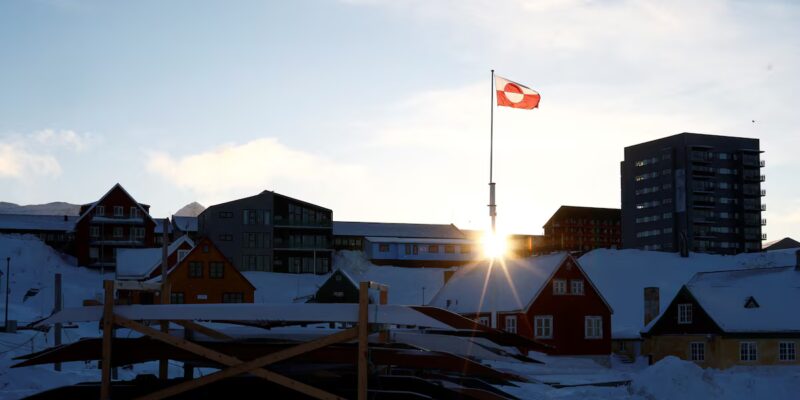
In 1867, America bought Alaska for just $7.2 million, about $158 million in today’s dollars, or roughly 42 cents an acre. Critics called it “Seward’s Folly.” History proved just the opposite with it one of the greatest bargains ever struck. Greenland, at 836,330 square miles, could be acquired for approximately $225 million at the same inflation-adjusted per-acre rate, an even bolder stroke of American foresight.
In the 1980s, as part of my family’s Louisiana-based seafood processing equipment manufacturing business, I traveled to Copenhagen for in-person meetings with executives at Royal Greenland’s headquarters. Working closely with my late father, we met with the Danes to discuss modernizing Greenland’s processing plants to boost global competitiveness. Those meetings revealed the harsh limits of Denmark’s Scandinavian socialist system: layers of bureaucracy, state procurement preferences for entrenched suppliers, and rigid quotas that prioritized control over expansion. Royal Greenland, the government-owned giant handling roughly half the fisheries sector, embodied centralized planning that stifles private innovation.
Those experiences convinced us that Greenland’s immense potential was shackled by socialism rather than liberated by free enterprise. I’ve long believed America’s entrepreneurial spirit could deliver far better outcomes for Greenland’s people. President Donald J. Trump’s proposal to acquire Greenland is pure common-sense conservatism. As Arctic competition intensifies, conservatives should rally behind this America-First vision, just as Alaska transformed from a mocked “icebox” into its modern strategic and economic powerhouse.
Greenland formally belongs to the Kingdom of Denmark but enjoys substantial self-governance for its roughly 56,000 inhabitants, predominantly of Inuit heritage. Under the 2009 Self-Government Act, the capital city Nuuk controls most domestic affairs, including some of the fisheries and natural resources, while Copenhagen retains foreign policy, defense, and currency rights. Denmark funds 50–60% of Greenland’s budget through an annual block grant of $560–650 million, a generous but classic socialist subsidy model financed by high Danish income taxes. This keeps Greenland dependent rather than self-sufficient. The economy muddles along with 90–95% of exports coming from fisheries and with minerals and tourism contributing almost nothing.
Denmark’s welfare-state model prioritizes equality of outcome and centralized control; America’s free-market mentality rewards risk, competition, and rapid innovation. Where socialism demands permission and subsidy, capitalism says: build, sell, profit. Alaska’s post-purchase gold rushes, oil booms, world-class fisheries, and multibillion-dollar tourism prove what happens when American entrepreneurs gain access without socialist barriers.
With U.S. ownership, structured as an independent territory with robust local Inuit governmental autonomy recognized as citizens of Greenland, prosperity would replace dependency with new opportunities. This is a moment of partnership, not subjugation: Americans and Greenlanders working together to uplift lives while respecting Inuit heritage and self-determination.
The majority of Greenlanders don’t want to be Danish, and they don’t want to be Americans. But they want to be free and they want to be our friends and in that relationship there is a solution to be had for the benefit of all. While polls reflect understandable caution, history, like Alaska’s transformation, shows how bold partnerships can win over initial skeptics. Here are key opportunities America could deliver directly to Greenland’s 56,000 residents, areas Denmark has largely overlooked in favor of controlling subsidies:
- Expanded Education Opportunities: Scholarships and access to U.S. universities plus vocational programs in STEM, environmental science, mining technology, and advanced fisheries management. America would support new local campuses and online platforms to slash high dropout rates and equip youth for in demand careers.
- Local Infrastructure Development, Including Roads: Massive investment in all-weather roads, bridges, tunnels, and community hubs connecting remote settlements, as road-building is an area Denmark has chronically underfunded. Greenlanders relying heavily on expensive air and ocean transport to most points on the island. This would cut isolation, lower transport costs, and enhance safety and economic mobility.
- Enhanced Services and Healthcare: Private-public partnerships for modern clinics, telemedicine, preventive care, mental health programs, and elder support. With direct flights to the U.S. mainland, only hours away, critical treatments become far more accessible, potentially life-saving.
- Economic Diversification and Job Creation: Tax incentives and grants for small businesses in tech, energy, artisan crafts, and geothermal development, plus entrepreneurial training that Denmark has neglected.
- Energy Independence: Support for micro grids, geothermal projects, and small modular reactors to reduce reliance on imported fuel and provide reliable, affordable power.
- Cultural and Environmental Preservation: Funding for Inuit-led heritage centers and sustainable eco-projects, protecting traditions while responsibly developing resources.
- Community Empowerment and Governance: Collaborative local councils ensuring Greenlanders lead decisions, backed by efficient U.S. administrative expertise that promote true self-reliance, not top-down control.
These are investments in people, treating Greenlanders as equal partners in prosperity.
Tourism, with glacier tours, northern lights viewing, authentic Inuit cultural experiences, could explode under American marketing and infrastructure, rivaling Alaska’s multibillion-dollar industry. Potential rare earth minerals, oil, and natural gas could be developed responsibly by competitive private firms, generating lasting local revenue.
As a Louisianian, I’m especially proud of one strategic prospect: positioning Greenland as the forward operating base for America’s expanding fleet of U.S.-manufactured heavy icebreakers.
The Coast Guard’s Polar Security Cutter program includes vessels built in Louisiana shipyards renowned for tough offshore construction. Homeporting or rotationally basing these ships in upgraded Greenland harbors would deliver unmatched Arctic reach, rapid response to Russian or Chinese movements, and high-paying maintenance, technical, and training jobs to Greenlandic residents, many of whom could train alongside Louisianians, turning national security into shared prosperity.
Strategically, ownership strengthens U.S. and NATO defenses. Pituffik Space Base (formerly Thule) already provides critical missile warning and surveillance. Full control would enable enhanced missile defense, integrated NATO command, monitoring of new Arctic shipping routes, joint exercises, and credible deterrence, making Greenland the defensive fortress Alaska became, now augmented by an American icebreaker presence.
While Denmark’s socialist model offers steady subsidies and control; America’s free-market mentality delivers freedom, competition, and prosperity. My eye-opening experience with socialism in Copenhagen decades ago proved its limitations, but given the chance, American capitalism transforms lives.
President Trump has a vision of success for what others dismiss as unattainable. Even as discussions explore all options, President Trump’s vision wisely prioritizes a negotiated partnership that respects Greenlandic self-determination while delivering mutual benefits.
In this defining Arctic moment, conservatives must unite behind Trump’s vision: genuine partnership for Greenlandic prosperity, icebreaker basing for shared jobs, and unbreakable American security. It’s time conservatives stand with him and finish with the success like that of Seward. Acquire Greenland, uplift its people through genuine partnership and secure our future. Let’s make Greenland great and advance American national security.
Advertisement
Advertisement
