
Ed. Note: Chuck Owen co-wrote this piece with
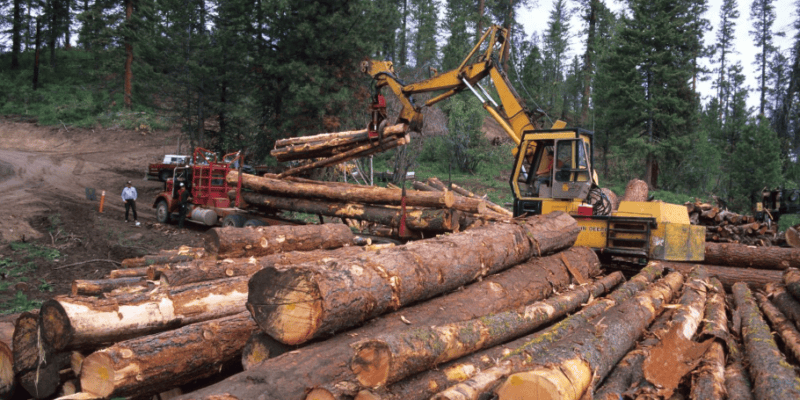
From the Arkansas line, in all directions down through much of Louisiana, dipping even into Cajun country, you see trees. Everywhere. The depth and breadth of our pine and hardwood stands and forests are almost indiscernible. Since serious management became a thing in the 1940s and reforestation took hold, professionals have managed these lands for timber, wildlife, fire prevention, and the Divinely created cycle of carbon working through these trees to produce the very oxygen we breathe.
For as long as most can remember, this industry was the heartbeat of rural Louisiana and stood as the backbone of our economy in Louisiana, producing lumber, paper, and dozens of other wood products that generated living wages and pockets of prosperity through nearly every parish.
Forty years ago the sector already carried real weight. Twenty years ago its impact remained substantial: in 1998 alone the timber industry generated about $5.4 billion in total value that flowed through logging crews, mills, trucking firms, and local businesses. With a state population of roughly 4 million, that money translated into meaningful per-capita economic activity and supported tens of thousands of jobs. Today the numbers look different.
Total industry output still registers in the billions, yet the practical reality on the ground is stagnation. Major paper mills that once absorbed millions of tons of fiber have closed—removing approximately 5.4 million tons of annual capacity in North Louisiana alone. The painful irony is that while we lost that domestic demand, the United States now imports 11.1 million tons of wood products. Another clear reason our low-value timber has lost its traditional usage. Standing timber volume continues to climb because growth far outpaces harvest. This oversupply does more than depress prices—it piles up fuel on the forest floor and raises the risk of catastrophic wildfires.
Meanwhile, pulpwood prices sit near multi-decade lows. Our loggers wrestle with rising insurance and operating costs propelled by our judicial and litigious climate while landowners see returns on investment shrink. The giant that was our timber industry is still standing, but it is staggering.
Those looking ahead do not believe that traditional markets alone can save our critical timber industry. Housing demand has fluctuated and the long decline of paper has permanently reduced outlets for low-value wood. Louisiana must therefore treat its timber crop differently. The clearest opportunity is biomass energy.
This “biomass” is a funny word and it comes with a lot of baggage inflicted by outsiders and naysayers alike.
Low-grade timber and wood residues can be converted into wood pellets that fuel power plants capable of generating reliable, around-the-clock electricity or sold overseas for heating. Alongside pellet-to-power, cogeneration (cogen) facilities—proven, refined technology—can produce electricity and useful heat while feeding into our already strained power supply. These are not experimental ideas; they are practical tools ready to help meet demand. Sustainably managed forests stay intact, unlike solar arrays that consume large open landscapes or wind turbines that threaten wildlife and raise aesthetic concerns.
Advertisement
Facilities processing around a million green tons a year can supply electricity for tens of thousands of homes while giving landowners and loggers a consistent market.
Two important bills—one in the U.S. House and one in the U.S. Senate—seek to expand the Renewable Fuel Standard precisely to create more markets for this low-value timber, recognizing both its energy potential and the fire risks created by oversupply. Our fingers ought to be crossed that these bills get through the US Congress.
The utilization of carbon can be part of the solution without the baggage and volatility of permanent underground burial. Pumping CO₂ into the ground for storage is an expensive, possibly dangerous, and energy-intensive way of placating political demands. Carbon is far better utilized when put to productive work—injecting it for enhanced oil recovery, curing concrete, manufacturing fertilizers, or producing certain chemicals and food-related products. These uses create additional economic value instead of treating carbon as waste to be sealed away forever.
A steady demand for low-value wood strengthens the forests themselves: more active management, healthier stands, reduced wildfire fuel, better wildlife habitat, and renewed vitality in rural communities and across the State. North and Central Louisiana’s existing logging workforce, transportation networks, and abundant pine resources make the region especially well suited for this transition.
Louisiana already has the trees, the expertise, and the infrastructure. What it needs is the decision to stop waiting for old markets to return and instead build new ones that match the scale of the resource. We need to energize the giant with pellet-to-power, refined cogen systems, and productive carbon uses. The timber industry can once again deliver both economic strength and environmental benefit across the state. Let’s do this.
Advertisement
Advertisement
