
A press release just went out about a topic which has a whole bunch of people furious, and it might serve to calm down some of the furor we’ve heard.
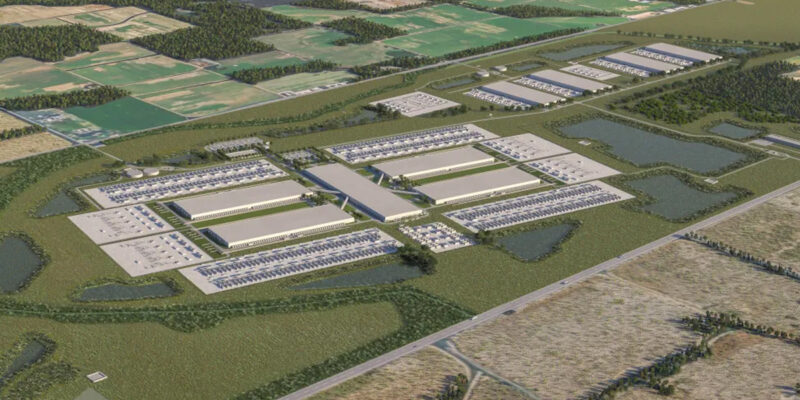
Namely, that the huge, multibillion-dollar data center going up in the countryside near the small town of Rayville, Louisiana, east of Monroe which the Meta Corporation is building won’t apparently inflict higher utility rates on Louisiana’s ratepayers after all.
Power and water, which these big data centers will use a lot of, happen to be commodities we have lots of in Louisiana. It rains here exceedingly often, though it does seem that we’ve had a little drier spring this year than normal, and we’re covered in rivers, bayous and streams. As for power, we’re sitting on so much natural gas in the Haynesville Shale that we’re like a little Qatar, and by rights we ought to have the cheapest electricity in America (and we did before Hurricane Ida trashed a goodly hunk of the power grid infrastructure in southeastern Louisiana, the cost of repairing of which was partly borne by ratepayers). It’s not much of a surprise that we’re seeing at least four big data center projects rolling in the state already, with rumors of more on the way.
But lots of people in Louisiana have taken on the same perspective about the AI data centers that folks around the country have – which is that all the power and water is going to get used up and everybody’s utility rates are going to skyrocket.
And in some places – particularly out West – those are pretty legitimate concerns.
Here, they’re less so. But from the beginning of the negotiations on the data centers, it’s been a priority that the energy supply to those facilities be dedicated. Meaning, power plants which directly feed them.
And in Meta’s case, Entergy is specifically doing that. In fact, this morning’s press release has news of an expanded agreement between Entergy and Meta which involves a big boost to power generation in north Louisiana and a whole lot of electric infrastructure which could prime the northern part of the state for further industrial development and job creation.
Entergy put out a fact sheet on the agreement…
Entergy Louisiana New Agreement with Meta Fact Sheet
Project overview
ELL will construct electric infrastructure across 13 Louisiana parishes, creating more than $2 billion in customer benefits over 20 years – in addition to the $650 million previously announced – and a more resilient, efficient grid that benefits all customers for decades to come.
Rate protection: The customer (Evest LLC – a Meta subsidiary) has committed to pay for all costs to connect customer to the grid and agreed to a 20-year contract with minimum monthly charges and credit backstops sized to recover incremental costs of system assets to extend service—ensuring other customers do not subsidize this project. The customer’s minimum charges are also subject to a true-up to maintain those customer protections as costs change.
Community benefits: As detailed in Entergy’s Fair Share Plus Pledge, the company’s approach will deliver billions in savings to customers while supporting economic growth and new investments in local communities. The agreement reflects Entergy Louisiana’s commitment to ensuring large customers pay their full cost of service while providing measurable value to all customers. Through a Sustainability Agreement, Meta is committing:
- $120 million (Meta + ELL match) for Entergy’s Power to Care program
- $140 million for low-income energy efficiency programs for vulnerable customers
- Helping fund up to 2,500 megawatts of new renewable resources
- Memorandum of understanding and financial commitments to explore the future development and use of nuclear power
- Construction of utility-scale infrastructure across 13 Louisiana parishes will have significant and lasting economic impacts, including construction and permanent jobs and property taxes.
The scale of transformation
- 7 new highly efficient combined-cycle power plants (1×1 configuration for operational flexibility and grid reliability) totaling more than 5,200 megawatts, with capability for future carbon capture and hydrogen co-firing
- 4 units in Richland Parish, 3 units in Pointe Coupee Parish
- Two new substations and ~240 miles of new 500kV transmission lines connecting North Louisiana to South Louisiana and Arkansas
- A new 500kV line stretching ~150 miles from Bunkie, LA in Avoyelles Parish to Rayville, LA in Richland Parish (Avoyelles, Rapides, LaSalle, Caldwell, Richland)
- Another new 500kV line stretching ~90 miles (60 miles in Louisiana) from El Dorado, AR to Rayville, LA in Richland Parish (Union Parish, Morehouse, Richland)
- Battery energy storage across three locations, including Iberville Parish and Washington Parish
- Nuclear power uprates at existing facilities
It’s a big deal, as these are all places where there isn’t a great deal of infrastructure or industrial or economic development. If you’ve driven from Vidalia to Rayville, for example, or from Alexandria to Monroe, you’ve seen that there isn’t a whole lot there.
And a data center project on its own isn’t really going to change that. It’s true that a data center isn’t like a car plant or a semiconductor factory. Those things won’t put hundreds or thousands of people to work. That said, data centers do need lots of maintenance, so they will create opportunities for nearby folks to service them, and the presence of that expertise in a community can lead to other things being sited there.
But the big thing is power plants and power lines. Because if you’ve got cheap land, road access (which you do have in North Louisiana, especially along I-49 and I-20) and adequate power transmission to go with cheap rates, and then a workforce with some technical prowess, you all of a sudden look pretty good to the site selectors.
Which means that the car plants and semiconductor factories people would rather have than data centers might actually come as an indirect result of the data centers. It’s not an either-or proposition.
Especially if you can get Meta to pay for the whole thing.
Which they’re saying they will.
We’ll see if that holds up. For now, we’re going to be optimistic.
Advertisement
Advertisement
