
One of the greatest fears of the Anti-Federalists during the debates over the ratification of the proposed constitution drawn up in Philadelphia in 1787 was that it would become so bloated and intrusive that the States would no longer be capable of regulating even the insignificant parts of their internal lives. One of the Anti-Federalists suggested that even the height of fences would fall under the sharp, never-sleeping eye of the new federal government.
Prediction fulfilled.
After more than two centuries of life under the Philly constitution, the Anti-Federalists have been proven right. The States are more or less the servants of the federal government today, the exact opposite of the way the system was supposed to function (i.e., the federal government was intended to be a coordinating agent to help the States cooperate in some selected areas like commerce and defense, not a dictator issuing thousands of commands to them each year).
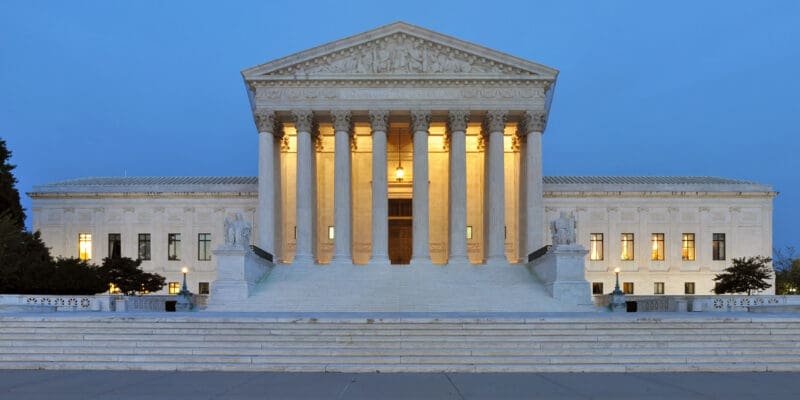
The federal Supreme Court’s ruling in the Chiles v Salazar case involving Colorado’s conversion therapy ban is the latest step down that path of consolidated federal control over the minutiae of internal State interests.
On the surface, the ruling looks pleasing from a conservative point of view: Colorado’s government showed an unjustifiable animus against a woman because of her attempts as a therapist to help some LGBT folks overcome their unwanted sexual desires; the conversion therapy ban is thus vetoed by the Court.
However, this ruling has the makings of a pyrrhic victory.
Ask yourself, fellow conservatives, do you really want the nine justices of this Court ruling on internal State matters of this kind? Is this not a stretching of federal jurisdiction beyond what is allowed, beyond what is beneficial?
We would say that it is.
The majority opinion justifies its striking down of Colorado’s conversion therapy ban on the basis that it violated the free speech rights of Ms Chiles, the therapist alluded to above, under the federal constitution’s 1st Amendment. But that amendment mentions only the US Congress, not the States (‘Congress shall make no law . . .’). Colorado’s State government ain’t the US Congress.
The legal experts will then say that the 14th Amendment requires that the Bill of Rights be applied to the States as well as the federal government. But that too is false; the 14th Amendment was intended to enforce some limited civil rights protections for the newly freed slaves after the War between the States, not overturn the entire constitutional balance of power.
We believe that so-called conversion therapy bans like Colorado’s are a travesty and should be repealed, as they hide the truth and beauty of God’s intentions for human sexuality and keep people trapped in destructive, unhealthy beliefs and behaviors. But that is beyond the scope of the departments of the federal government to accomplish, including the Supreme Court’s. Regulation of therapists is a power that was not delegated to the federal government. This is therefore an issue that must be slugged out at the State, county/parish, or town level.
It is worth recalling what Tench Coxe, one of the influential men who took part in the ratification debates in Pennsylvania, said about the powers reserved to the States (all the more so, as he supported the more energetic Philly charter rather than the weaker, more decentralized Articles of Confederation). The States, not the federal government, were to regulate their own internal affairs. In his list of powers forbidden to the federal government, he included this one: ‘altering the criminal law’. But that is precisely what the Chiles decision does. Elsewhere he explicitly listed internal/intrastate criminal law as a power belonging exclusively to the States: ‘Exercise police powers (regulate and administer criminal law)’ (Mike Maharrey, ‘Tench Coxe: A Detailed Breakdown of State vs. Federal Powers,’ tenthamendmentcenter.com).
Allowing the Supreme Court to meddle in these affairs opens the doors to all kinds of mischief. Conservatives should be able to easily enumerate some of those instances (the 50 years of Roe, removing the Bible from public schools, etc.). But there is the potential for new misery. For instance, several Red States have passed laws requiring abortionists to give certain information to women who are considering killing their unborn child – that abortions increase cancer risk, cause babies pain, and so on. Precedents being established by rulings like Chiles could be used by Leftists to undermine those pro-life laws by claiming they impair the freedom of speech of the pro-abortion doctors.
Think it couldn’t happen? Think again. Leftists have been thinking about this for years. The following was published in 2018:
‘But anti-choice advocates have another problem. Eighteen states have passed “mandatory counseling” laws that force abortion providers to give people seeking an abortion misleading or outright false information aimed at dissuading them from getting an abortion. If the Supreme Court does strike down the FACT Act on the grounds that telling the truth is compelled speech that violates CPCs’ First Amendment rights, then surely laws requiring abortion providers to share false, anti-choice propaganda violate their First Amendment rights too’ (Harvard Civil Rights-Civil Liberties Law Review, ‘It’s Abortion Providers, Not CPCs, Whose Free Speech Rights Are Being Violated,’ journals.law.harvard.edu).
The federal government generally isn’t the proper venue for resolving disagreements over the regulation of what therapists can say vis-à-vis gender confusion, or any other contentious social issue. Here the United States as a whole can benefit from what the South warned them about at the time of the misnamed Civil War: A decentralization of federal power would be beneficial to all the States, allowing them to govern themselves according to the traditions and laws to which they are accustomed. Professor Brion McClanahan pointed this out in his recent essay on what we can glean of value from Confederate history:
‘2. Decentralization of power was designed to prevent tyranny and the imperial presidency. The Confederate Constitution included checks to that effect. Abraham Lincoln proved their point’ (‘What Can We Learn from the Confederacy?’ abbevilleinstitute.org).
As Prof McClanahan also notes, six Southern States still celebrate Confederate history in some form in April. That is helpful, as such public celebrations could serve as an opening to a conversation about the perils of federal consolidation of power, and what the wise men of the South of the past and present can teach us about how to avoid and/or remedy those perils.
Louisiana’s Legislature, bending the knee to the Woke Leftists, stupidly repealed all public commemorations of Confederate history in 2022 (no more holidays for General Lee’s Birthday or Confederate Memorial Day). Her people, being dissuaded from seeking the beneficial knowledge of their ancestors, will therefore be less likely to contribute anything constructive to the discussions about how to rebalance State and federal power than others.
But there is consolation, as piles of money for carbon capture projects will aid in diverting attention away from all those pesky and heated issues of federal-State jurisdiction and historical memory, and numb us into blissful materialistic complacency.
Advertisement
Advertisement
