
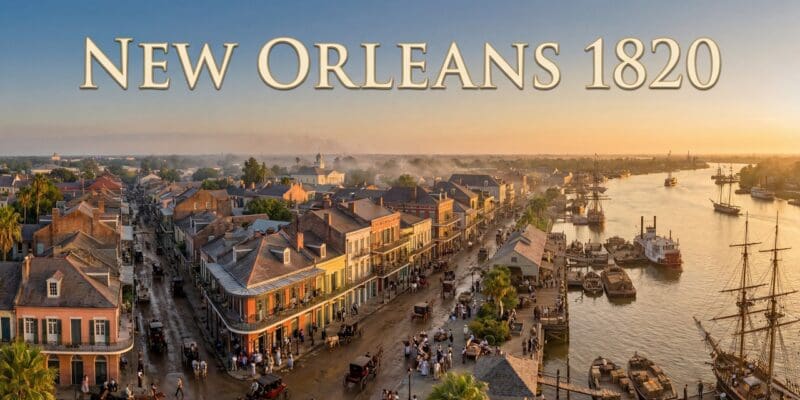
We found this interesting enough to pass along. It’s a placeholder for a real post from me today, seeing as though I’m going to be spending the whole day making the last-minute preparations for the Louisiana Freedom Caucus PAC’s 2026 Legislative Summit dinner. You’ve likely seen the recurring posts on that, so I don’t suppose anything more than a link to the Hayride’s Events page with all the details and an opportunity to get one of the last few tickets available is necessary, right?
Anyway, there’s perhaps a little too much ick-factor-about-slavery in here, which isn’t offensive – slavery was obviously terrible, but so was the lack of machinery and electric power which capitalism and the Industrial Revolution it spawned was able to fix, and it so happens that the acceleration of the Industrial Revolution in the northern states ultimately destroyed slavery not just on the battlefield but in moral terms as well.
You’ve undoubtedly read columns and posts I’ve written on that subject. Economics and morality have a very interesting, close relationship. It turns out that over the long term, mass morality enables advanced and successful economics, and successful economics makes mass morality easier. Those things are intuitive, and yet so many people bristle at the idea.
That always makes me suspicious of the motives of the bristlers.
Was New Orleans an immoral city from the beginning? You could make such an argument. Certainly the slaveowners were immoral, in the sense that they had slaves. My guess is there will come a time when many of us are similarly judged. Certainly, abortion will be looked upon as a great evil by people who are able through technology and advanced economics to bring life to a fetus without the kinds of adversities unwanted pregnancies currently confer.
Anyway, this is a take on what New Orleans was like in 1820. It looks at least mostly realistic, or at least plausible, to us.
Advertisement
Advertisement
