
Saturday was a consequential day in Louisiana political history, though hardly a surprising one.
After all, it’s not often that a sitting U.S. Senator can’t even make a runoff in his own party’s primary. But on the other hand, by Saturday it was pretty obvious Bill Cassidy was going down.
To everybody but Bill Cassidy, apparently.
We’ll get to that down the page. But there was a lot going on around the state, electorally speaking, so let’s get to it.
WINNERS
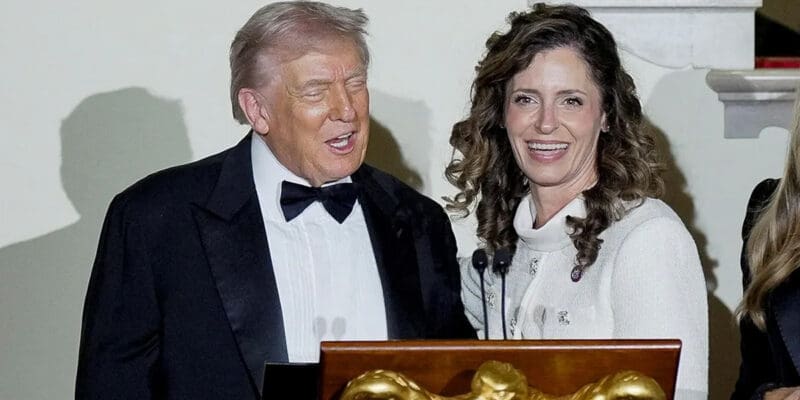
1. Julia Letlow – As the primary campaign went on, it started to become obvious that Letlow was beginning to pull away from the field, on the strength of her backing by both President Donald Trump and Governor Jeff Landry. She became the establishment choice, of sorts, which sounds a little weird seeing as though she was running against the ultimate establishment politician in Cassidy. And that paid off, as Letlow pulled off a whopping 45 percent of the vote, some 17 points better than John Fleming’s 28 percent second-place finish.
She’s just five percent away from clinching this in the runoff, and you’ve got to figure she can get that from the Cassidy voters. Letlow is a heavy favorite to win this thing, given the lead she established on Saturday, Trump’s backing (you’d figure the president will make a stop somewhere in Louisiana on Letlow’s behalf) and a massive financial advantage on Fleming. She’s even turning into a media darling of sorts since the big win on Saturday.
2. John Atkins – Foster Campbell’s reign of terror on the Public Service Commission is coming to an end, and we now have a pretty good read on who his successor will be. It’s Atkins, who’s a Shreveport-area business leader, conservative donor and energy executive. Atkins got 88 percent of the GOP primary vote on Saturday, which is more an indication he didn’t have a lot of competition than anything else, but that still made him the highest vote-getter in a competitive major race in this cycle. His Democrat opponent in November, James Edward Green, had an impressive 76 percent showing, similarly against a lackluster opponent, but in raw vote numbers Atkins pulled 66,000 votes to Green’s 47,000.
Atkins is your next PSC member from District 5. That’s clear. He’s going to be a complete change from Campbell’s mini-Huey Long impression.
3. John Young – In what became a three-way race with Mark Wright and Stephanie Hilferty for the PSC District 1 seat Eric Skrmetta is vacating, Young rode the loyalty of Jefferson Parish voters into a solid first place position. He finished with 31 percent to Hilferty’s 28; Wright, who many thought would lead the race, came in third with 24.
It’s a significant political comeback for Young, who was last involved in a major political race back in 2015, when he came in third behind Kip Holden and Billy Nungesser in the jungle primary for Lt. Governor – just one percent (at 29) behind Nungesser (at 30) in missing the runoff. Now he’s up against Hilferty, with the real battleground in the race being St. Tammany Parish. You’d have to figure Wright’s voters will overwhelmingly be behind Young, but on the other hand few would have expected Hilferty to top Wright on Saturday. Given her Cassidyesque voting record in the state legislature, a Young victory in the runoff is going to be a conservative priority statewide.
4. Joseph Cao – There wasn’t a whole lot of attention paid to the three-way BESE District 1 race, but perhaps their should have been given Cao’s performance. He nearly won the GOP nomination in the primary, hitting 47 percent of the vote while Ellie Schroder, the wife of former state treasurer John Schroder, picked up 31 percent. In third place was Mike Hollis, the brother of former state representative and current director of the U.S. Mint Paul Hollis, with 22 percent.
Like Young, Cao mounted a political comeback. He’s been floating around various races since that massive upset put him in Congress for two years after the 2010 elections but hasn’t found an electoral home. He might be about to find one.
5. Billy Burris – Maybe the most surprising race in the state was that for District 1 of the state Supreme Court, which pitted Burris against Blair Downing Edwards, the wife of former Tangipahoa Parish sheriff Daniel Edwards (and the sister-in-law of former governor John Bel Edwards). The race was considered nip-and-tuck all the way to the finish line, but on Saturday Burris blew out Edwards by a 58-42 margin.
With a state Supreme Court which is nominally Republican but only barely conservative, Burris’ election is a really big deal. It might be the most consequential result in the state outside of what happened in the Senate race, though an Atkins victory in PSC-5 would represent the biggest changeover.
6. Party Primaries – We only had them in PSC, BESE and Senate races, given the suspension of the House primaries after the state’s congressional map was thrown out by the Supreme Court in the Callais case. Still, the switchover to party primaries was clearly a big success on Saturday.
Louisiana had 800,000 voters turn out for a May election on Saturday. That’s more than we can ever remember. Was it a particularly high number? No, but spring elections here are NEVER high-turnout elections.
Part of that was the 340,000 Democrats who turned out for their Senate primaries, without a candidate running anybody had ever heard of (Jamie Davis got 47 percent and Gary Crockett 26 percent; Crockett edged Nick Albares by less than 300 votes to make the runoff). But 400,000 Republican voters, out of just over a million registered voters, turning out for a May primary election is a pretty good number.
We heard a lot of feedback from voters about the current system, and almost all of it was positive. Republicans get to pick which Republican they want to run in the general election, was the chief comment we heard, and they liked that fact a lot.
You’re going to hear a ton from the status quo crowd about how we need to go back to jungle primaries. We don’t think that’s representative of the folks. What we heard was that the primaries were a breath of fresh air.
LOSERS
1. Bill Cassidy – A lot of the other writers here at The Hayride have weighed in about Cassidy’s dismal 25 percent finish in the GOP Senate primary, so I don’t need to go too far with this. But the only way to truly describe this campaign of his was that it was ignominious. Cassidy had zero connection with the voters, he did nothing to address his disqualifying vote for the impeachment of Trump back in January 2021, he presented nothing compelling to Louisiana Republicans he knew were turned off to him, and – probably worst of all – he carried this through to the finish line rather than just getting out of the race with some dignity a couple of months ago when it was obvious he was going to lose.
And then when he lost on Saturday, Cassidy was petulant and vindictive toward Trump, as though somehow it’s Bill Cassidy who was the aggrieved party and was treated unfairly. That was the last in a long line of poor decisions; at the end of the day, what he did was to validate the public’s decision to send him packing.
Now we’ll get to see the real Bill Cassidy. He’s a political zombie roaming Capitol Hill until January, but he’s also unmoored by electoral considerations. Does that mean Cassidy spends his time trying to exact political revenge on Trump until then the way fellow zombies Mitch McConnell and Thom Tillis have been doing? Or does Cassidy go out proving to the public that he was more good than bad?
We have no idea. Which is probably why it’s a good thing the state’s Republican voters decided to move on from him.
2. The Louisiana Legislature – Most of the pundits you’ll hear pontificating about Saturday’s results will call Landry a loser due to the defeat (by whopping margins) of the five constitutional amendments; after all, he did throw a little bit of money behind Amendments 3 and 4. But the thing is, Landry’s candidate in the big race, Letlow, was a huge winner. So Jeff Landry came out at least even on Saturday.
But the state legislature, who are the folks presenting those five amendments to the voters, were the real losers as those amendments went down by margins ranging from 58 to 78 percent.
The lesson here is really simple, and it’s twofold. First, don’t send up constitutional amendments in spring elections. Nobody trusts the politicians in this state on matters of policy, and slotting constitutional amendments written in legal jargon people struggle greatly to make sense of into election cycles where the public isn’t generally paying a lot of attention just smacks of trying to put one over on the voters. Given that the default vote on constitutional amendments is always “No,” you can’t make up the ground you need to make up during a spring election.
And second, never – EVER – put five amendments at a time in front of the voters. That’s a recipe for failure. There should never be more than two amendments in front of the public at a time, because people can’t process that much complex policy and more importantly, they don’t want to. There’s a natural irritation with politicians who are elected to make policy then turning around and asking the voters multiple times a year for direction on things nobody has time to study, and that irritation is going to manifest itself in massive amounts of “No” votes.
And it’s a shame, because we as a state would have been better off had the first four amendments passed.
This is on the legislators. If they want to have the will of the public be reflective of the will of the legislature with respect to things like reforming the civil service, getting rid of the inventory tax, paying down retirement debt and establishing what will one day be a great school system in St. George, those items have got to be set up in a proper posture to be passed.
As it stood, the Soros-funded Power Coalition for Equity and Justice spent well into the seven figures to kill those amendments, and that wasn’t matched on the pro side. The Left was able to buy a victory they wouldn’t have been able to get in a general-election setting in the fall when everybody will be voting. And this has now happened two years in a row. Bad tactics, guys.
3. St. George – The resounding failure of the amendment to create an independent school district for St. George – the vote was 77-23 against – was am almost ridiculous failure. It even lost 69-31 inside East Baton Rouge Parish, and that alone would have killed the amendment; Amendment 2 had to pass parishwide and statewide in order for the school district to come into being.
With a blowout loss like that, the question then becomes, whose responsibility was it to lead the effort to pass this thing? Honestly, we can’t even say. And that’s a problem, because if you’re going to take on the educational establishment statewide for a project like this you’d better be coming with a Brinks truck full of cash, you’d better have tons of advocates extolling the virtue of that new school district all over the state, you’d better gin up statewide and national press, you’d better create some allies in places (North Baton Rouge, for example) that people wouldn’t expect you to have and you’d better have a rock-solid plan for how to handle the transition into a new school district.
It didn’t look like any of that was done. To the extent it was, it’s pretty obvious none of the state’s voters saw much of it. So if you’re that poorly prepared and you take it on the chin this badly, why go and pass the bill creating this amendment in the first place? That burns political capital it’ll take years to get back. Worse, it erodes confidence in the leadership of the city of St. George at a time when confidence ought to be high.
That drawing board had better be busy in advance of another shot at this in two years.
And yes, St. George absolutely should have its own school district. Louisiana’s economic development future depends on this to a not-small extent.
4. John Fleming – He made the runoff, so we aren’t going to castigate Fleming too heavily here, but a 45-28 margin behind Letlow isn’t what he needed. Fleming touted the fact that his was a “grassroots” campaign, but that’s another way to say “we don’t have any money.” And it showed, because his campaign was heavy on social media and even heavier on attacks, principally on Letlow as she began moving up in the polls.
Now he’s down 17 points in the poll that matters more than any other, and he’s down even worse than that on the money – and Fleming is really out of time to change that by trying to raise cash. He’s got to find 22 percent of the vote out of the 27 percent unaccounted for between the two runoff participants, or else he’ll have to turn people out in the runoff who didn’t show in the primary.
We’re not saying it’s impossible, but Fleming is going to need something he didn’t have on Saturday – and we’re not sure where he can get it.
That said, John Fleming is still in the race and Bill Cassidy is not, and that is a victory for Fleming which he should 100 percent take pride in claiming. “I took Bill Cassidy down” is a boast he can make which is absolutely true, and he deserves the ability to crow about it.
5. Blair Downing Edwards – Perhaps better said is that the Edwardses were the losers and not just Blair. But this was something of a test of the residual electoral strength of the Edwards dynasty in a Supreme Court district which favored them, with Blair as a registered Republican not bearing the stain of a “D” next to her name, and she failed it pretty badly. It’s not that Burris was a nobody – he’s a well-liked and well-respected appellate judge. But when that race began most people thought that with access to lots of the sheriffs in southeast Louisiana and a million dollars’ worth of trial lawyer money (she outspent Burris more than 2:1), she’d be a favorite.
It turns out that the folks don’t want anything to do with the Edwardses. And that has implications for the future of Louisiana politics.
6. Louisiana’s Teachers – This is the second year in a row that the state’s teachers turned out in droves to vote down a constitutional amendment that would have resulted in a pay raise, and we’d be shocked if there’s a third. The plan to provide that pay raise is sound – pay off retirement debt and free up local school district money being used to service that debt, and therefore the locals would be able to fund pay raises without depending on the state for money. But no – they didn’t like that idea; they wanted pay raises to come straight out of the state’s coffers.
Except the state doesn’t have the money. Not with the coming Medicaid drawdown thanks to Edwards’ stupid expansion of that program which blew up the state budget. Louisiana’s going to have to embrace an austerity program which can only be relieved by a gigantic economic upturn that we can’t count on just now, and that means there is no extra money to drop out of helicopters on teachers.
They blew it. Twice. And we’d be pretty surprised if they’ve got any friends left in the Legislature.
It’s a shame, too, because the state’s educational performance is on the rise and the teachers should get credit for that. Maybe the local school districts can address pay increases going forward. Given that the teachers actually work for the local school systems and not the state, that’s perfectly appropriate.
Advertisement
Advertisement
