
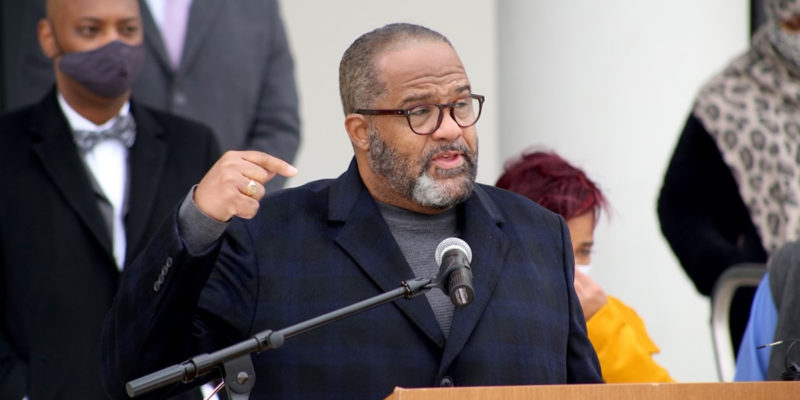
I normally don’t write about the inside baseball within the Democratic Party. However, I did find an interesting article in Politico recently about US Congressman Troy Carter. The article mainly focuses on Carter’s ascendency within the Congressional Black Caucus in recent years. In fact, Carter is well-positioned to become the next chair of it.
However, the most intriguing aspect of this article comes from Carter’s response about the Democratic Party’s power struggle between the establishment wing and the incoming wave of far-left progressives/Democratic socialists to the US Congress:
“… The real threat could come from a slew of young progressives who have signaled they aren’t interested in waiting their turn next term or otherwise playing nice with the traditional Democratic powers-that-be. Some of those future lawmakers, such as Darializa Avila Chevalier of New York and Chris Rabb of Philadelphia, could be joining the CBC.
Carter brushed off the potential for conflict. He said that while the CBC “still plays a role” in moderating House Democrats, he would not endorse the suggestion from centrist lawmakers such as Reps. Josh Gottheimer (D-N.J) and Tom Suozzi (D-N.Y.) that self-avowed Democratic socialists like Avila Chevalier and Rabb don’t belong in the Democratic Party.
“We’re not going to let people pit us against each other,” Carter said. “A Democrat’s a Democrat’s a Democrat. We have different ideas, we have different philosophies, we have different views, different approaches on how to get there, but our missions aren’t different.”
If you’ve followed national politics recently, then you may have seen that a number of establishment, incumbent Democratic congressmen have lost their party primaries to insurgent, grassroots Democratic Socialists of America (DSA)-aligned candidates in New York City and other major American cities. For instance, a 29-year-old Democratic socialist candidate from Denver, Colorado named Melat Kiros handily defeated a 15-term incumbent US congresswoman in a recent primary election.
Clearly, Democratic primary voters across the country are beginning to send a message to the Democratic political establishment ahead of the 2026 midterms. This surge of progressive/far-left political activism in Democratic Party primary elections leaves longtime Democratic politicians like Troy Carter in a precarious position.
Will senior-level Democratic lawmakers like Carter condone the radical views of the freshman DSA congressmen in the next congressional session? Based on Carter’s quote above, we can safely assume that he will do little-to-nothing to stop this creeping radicalism in his own political party.
Advertisement
Meanwhile, Democratic candidates in Louisiana have continued to suffer catastrophic defeats in basically every statewide election over the past four years. Troy Carter’s ascendancy within the US Congress over the past few years serves as an interesting contrast to the misfortune of the Democratic Party in his home state of Louisiana.
Nevertheless, I don’t foresee a scenario where a machine politician from New Orleans like Carter possesses the will to moderate the rising Democratic socialist wing of his party in the next Congress. Only time will tell what the future of national Democrats looks like and whether that radicalism will trickle down into Louisiana politics, especially given the weak state of the party here at home.
—
Nathan Koenig is a frequent contributor to RVIVR.com, a national conservative political site affiliated with The Hayride. Follow his writing on the Louisiana First Standard Substack, on Twitter (X) @LAFirstStandard, on Tik Tok @la.first.standard & on Instagram @lafirststandard. Email him here: louisianafirststandard@proton.me
Advertisement
Advertisement
