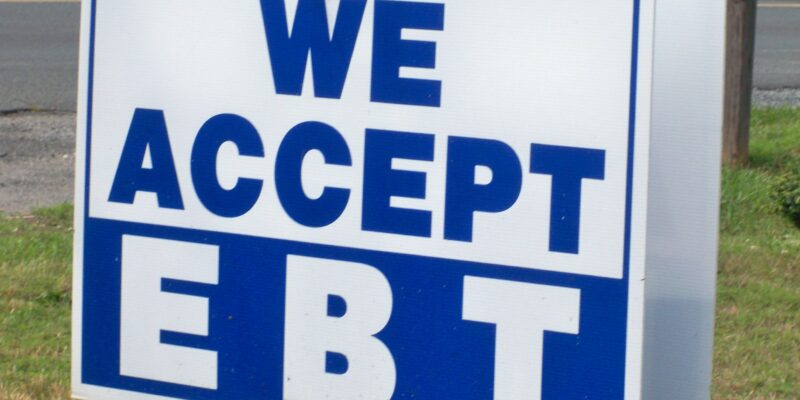
(The Center Square) — Louisiana’s network of stores accepting federal nutrition benefits remains substantially diminished years after oversight failures prompted a federal freeze on new vendors and tighter rules that state health officials say drove out fraudulent operators.
In response, the state Department of Health is planning a recruitment campaign meant to attract new vendors — which generally consist of grocery stores — and an assessment of barriers keeping them from joining the program.
The Louisiana Legislative Auditor found the state’s authorized WIC vendors fell from 723 in 2012 to 310 in 2019, a 57.1% decline. The number recovered to 386 during fiscal year 2026, with the Louisiana Department of Health reporting 395 authorized vendors by October.
Auditors found only 18% of Louisiana’s low-income neighborhoods had convenient access to a WIC vendor, citing a federal study.
The federally funded Special Supplemental Nutrition Program for Women, Infants, and Children provides food benefits, nutrition education and other support for eligible pregnant and postpartum women, as well as infants and children younger than 5. Louisiana’s program served 109,034 participants in September, according to the audit.
The U.S. Department of Agriculture blocked Louisiana from authorizing new vendors in 2014 because of deficiencies in state oversight. Those included failures to verify vendor prices, report disqualified vendors, identify and monitor high-risk stores and impose sanctions for violations. The audit states that the new rules “reduced a vendor’s ability to commit fraud and resulted in the withdrawal or removal of bad actors.”
Federal officials lifted the moratorium in May 2017 after the state strengthened its authorization criteria, established vendor peer groups and filled key vacancies.
However, the department’s own account from 2017 shows the freeze also affected stores seeking to continue participating after routine business changes.
In a state blog post that year, then-Bureau of Nutrition Services Director Bruce Boyea said the moratorium resulted in the loss of nearly 200 vendors. Stores that changed locations, for example, had to reapply, but those applications could not be approved during the freeze. Boyea wrote that the losses forced some participants to travel farther for groceries.
The new audit identified other pressures on the vendor network, including technology requirements for electronic benefits and grocery industry consolidation.
ALDI’s acquisition and conversion of Winn-Dixie stores resulted in 20 fewer Louisiana WIC vendors, auditors reported. ALDI does not carry the specific infant formula brands required for participation, according to the audit.
Federal rules require states to authorize enough stores, distributed across their jurisdictions, to ensure adequate access to WIC foods. The federal study’s measure of convenient access generally means a participating store within a one-mile drive in urban areas or 10 miles in rural areas.
Auditors found Louisiana could improve access by explaining exceptions to its vendor requirements more clearly.
The state generally requires participating businesses to be full-line grocery stores and meet operating-hour and other standards. Certain requirements can be waived to address inadequate access, but application materials do not clearly explain those exceptions, potentially discouraging eligible businesses from applying.
The report identified oversight gaps as well. Of 349 vendors operating throughout federal fiscal years 2023 through 2026, 223 received neither a routine monitoring visit nor a compliance investigation during that period. Federal rules do not require every vendor to receive such a review within a specified period, and LDH analyzes transaction data to identify potential problems, the audit notes.
Shopping difficulties presented another barrier. Nearly 73% of 368 shopping-related complaints received from 2021 through 2025 involved transaction problems. Those complaints were not necessarily confirmed violations; some lacked enough information to determine whether the attempted purchases were eligible.
The findings follow a June audit that found Louisiana did not use $111.6 million, or 34.6%, of available WIC funding during federal fiscal years 2021 through 2024. Unused funds remain with USDA rather than being spent in Louisiana.
LDH agreed with all eight recommendations in the latest audit. The department plans to implement a statewide vendor recruitment strategy by January 2027, clarify application exceptions by Dec. 31 and submit revised monitoring policies to USDA by Jan. 31.
Advertisement
Advertisement
