
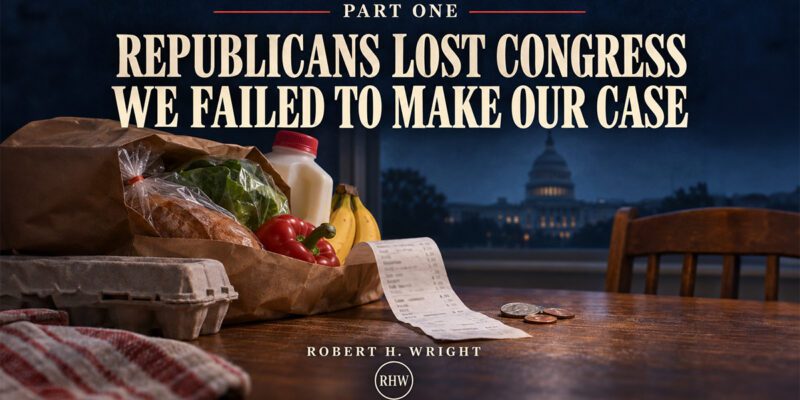
A family standing at the grocery checkout doesn’t need a lecture on inflation. They need to know why the bill is still so high and what the people asking for their votes are doing about it. Republicans lost both chambers of Congress on November 3. As a Republican, I believe we gave voters too little reason to connect the work we were doing in Washington with the choices they were making at the kitchen table.
James tells us to be quick to hear and slow to speak. We would have run a better campaign if we had taken that seriously. A parent can hear that inflation is slowing and still have to put something back on the shelf. Start with what that family is paying. Then explain what we’ve done, what’s still underway, and when people might see a difference. We can ask voters for patience once we’ve given them something concrete to judge. (James 1:19)
Consider the border. President Trump tightened enforcement, and preliminary figures put southwest Border Patrol apprehensions below 99,000 in fiscal year 2026, about 95 percent below the annual average under President Biden. We had a result we could put a number on. We should have explained what the figure measures, what we changed, and how we intended to sustain the gains. (U.S. Customs and Border Protection)
The same standard applies to national defense. The Constitution’s Preamble calls on us to “provide for the common defence.” Protecting Americans from hostile forces abroad is, in my view, the federal government’s first duty. China has more warships and submarines by count, but one of America’s greatest military advantages is our technology. Better sensors can help our crews spot a threat sooner. Secure communications help them share what they see, and precision weapons help them act on it. That edge gives our forces an advantage today. If we stop developing and putting better technology into the hands of our troops, countries like China will catch up, and we could fall behind. We also have to be able to build and replace what our forces use. That’s why Trump’s plan to fund automated munitions factories and his administration’s agreement with Taiwan to expand American chip production matter. Those chips go into systems such as radar and secure communications. Voters deserved to hear why we need to stay on the cutting edge and why we need to be able to make critical components here if a conflict cuts off supplies from abroad. (U.S. Constitution, Pentagon report on China’s military, defense funding plan, and U.S. Department of Commerce)
Trade takes more explaining because the gains and costs can reach people at different times. Trump used access to American customers as leverage. Under the trade framework with Europe, the EU said it intended to eliminate tariffs on U.S. industrial goods. Tariffs can give a company a reason to build here, and they can raise costs for a factory that buys imported parts. You don’t turn a large ship around in a short time. An importer can face a higher bill right away. A new factory may take years to open. We should have told voters how we’d judge whether the policy was paying off, including how many plants open and what those jobs pay. In September, the Bureau of Labor Statistics reported 72,000 more manufacturing jobs than at the December 2025 low. That gives voters a real number to follow. It takes more evidence to say how much of that gain came from tariffs. (Bureau of Labor Statistics and U.S.–EU trade framework)
That candor matters when we talk about taxes, too. Customs duties and excise taxes were major sources of federal revenue before the Sixteenth Amendment was ratified in 1913. I favor letting Americans keep more of what they earn. If Republicans want to raise more revenue through tariffs, we owe voters the other half of the arithmetic. What would families keep in their paychecks, and what might they pay in higher prices? (Congressional Research Service)
Proverbs condemns dishonest scales. I think of that when my party is tempted to put every gain on one side of the ledger and leave the costs off the other. A Christian Republican should be able to defend a policy, admit where it falls short, and say what would persuade him it needs to change. That kind of honesty is part of listening to the people we ask to trust us. (Proverbs 11:1)
Paul tells us to pray for those in authority. I’ll pray for the Democrats who will lead Congress, and I’ll oppose policies I believe will hurt the country. I owe the same honesty to voters whether my party wins or loses. (1 Timothy 2:1–2)
I’m still a Republican. I have been all my adult life, and I still believe much of what we’ve begun can make life better for American families. I also believe we can learn from this election. The next time a parent asks what our policies mean for the family budget, let’s start with the grocery bill in that parent’s hand. Let’s listen long enough to understand what they’ve had to give up, then give them an honest account of what we can do to help.
Next week, I’ll ask whether we chose candidates who could earn the trust of people who don’t usually vote Republican. I have hope that we can earn that trust again. The work begins in the towns and neighborhoods we call home, where people of both parties still help a neighbor through a hard week. If we bring that same sense of duty to public office and keep showing up after the campaign signs come down, we can give people a reason to believe their government hears them.
Advertisement
Advertisement
