
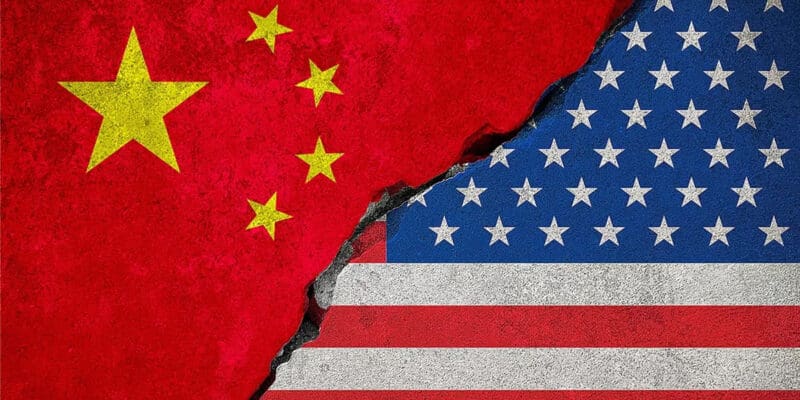
America builds the best computer chips in the world, and China’s Communist Party wants them.
That single fact should drive the entire debate in Washington over artificial intelligence export controls, because what’s at stake isn’t a niche trade dispute between two economies. It’s whether the most important technology of this century gets built on American soil, by American workers, under American rules, or whether we hand Beijing the tools to catch up to us militarily.
That last word matters more than people realize, because there is no such thing as a purely commercial Chinese tech company. Under Chinese law, every business of any size operates with a Communist Party committee embedded inside it, and under Beijing’s “military-civil fusion” strategy, any breakthrough a private Chinese firm makes in AI, chips, or advanced manufacturing is available to the People’s Liberation Army on demand. China’s own National Intelligence Law requires companies to hand over data and cooperate with state intelligence work whenever asked, no court order required. So when we talk about China “competing” with American chipmakers in a free market, we’re using the wrong words entirely. There is no free market on the other side of that transaction. There’s the Chinese state, using private companies as a front, and every dollar of ground that Chinese business gains, the Chinese military gains right alongside it.
That’s why the usual free-trade instinct, that competition is good and government should stay out of the way, doesn’t apply here. Competition assumes both sides are playing the same game. China isn’t. It’s a system where the state directs capital, protects favored firms, and treats intellectual property theft as an arm of national strategy, not a violation of it. We’ve seen this play out again and again, from Chinese manufacturers copying Tesla’s designs down to the dashboard, to counterfeit iPhones built on stolen Apple engineering, all while Beijing’s government not only looks the other way but frequently subsidizes and shields the theft. When American chip technology ends up inside a Chinese AI system, it isn’t feeding a competitor in a fair fight. It’s feeding a government that treats every private success as state property the moment it’s useful.
This isn’t a new pattern either. The U.S. share of global semiconductor manufacturing collapsed from 40 percent in 1990 to just 12 percent today, largely because policymakers let production drift overseas and assumed markets would sort it out. Solar panels and batteries followed the same script, and in both cases China’s state-directed industrial machine, not some neutral marketplace, is what took the ground we gave up. AI infrastructure represents trillions of dollars in coming investment. Strong export controls are what keep that buildout here, instead of in China or in third countries willing to quietly reroute American hardware to a Communist Party that will use it for whatever purpose it decides serves the state.
Critics claim controls hurt American chipmakers, but the record says otherwise. The two years following the first major round of restrictions were among the best on record for U.S. chipmaking equipment suppliers, as customers outside China filled the gap within months. Nvidia profits from selling chips, including to China, but Washington’s job is to protect national security and America’s economic edge, not to maximize one company’s quarterly numbers, especially when that company’s Chinese customers answer to Beijing whether they admit it or not.
Which brings us to the piece that should worry Americans most: this is ultimately about who wins the next war. Advanced AI will power everything from autonomous weapons to military intelligence and battlefield decision-making, and because of military-civil fusion, there is no meaningful line in China between a chip that trains a chatbot and a chip that trains a targeting system. Every AI gain China books commercially is a gain its military can draw on directly.
China knows it’s behind, and it knows chips are the bottleneck. The founder of DeepSeek, China’s answer to ChatGPT, has said chip access, not money and not talent, is his company’s single biggest obstacle. That hasn’t stopped Beijing from trying to cheat its way around the rules, using the same state-directed playbook it uses everywhere else. Smugglers have moved hundreds of millions of dollars in restricted GPUs into China, some of it hidden in prosthetic baby bumps and packed alongside shipments of live lobsters. Huawei, a company with deep ties to the Chinese state and military, ran a shell company to illegally source more than two million chips out of Taiwan before it got caught. Front companies keep popping up in third countries for the sole purpose of buying chips their real end users aren’t legally allowed to have.
Advertisement
Because computing power roughly doubles every two years, the American chips shipping today outpace anything China can build on its own, and that gap compounds if it’s allowed to hold. Some estimates put Chinese AI training costs at ten times higher than American costs by 2027, if controls stay in place.
The technology leadership case follows the same logic. Nvidia and the rest of the American chip industry supply virtually every major AI system on the planet, including systems operating inside China, because there’s no credible Chinese alternative at scale. Huawei’s best chip, the Ascend, doesn’t come close to Nvidia’s leading products, and China can’t manufacture them in real volume anyway. The CEO of ASML, the company that makes the world’s most critical chip-manufacturing equipment, has said current restrictions will leave China 10 to 15 years behind the West in advanced chip production. That’s the margin worth defending, and the next two to four years are the decisive window. If controls hold, American training clusters keep pulling further ahead with each new generation of hardware. If they weaken, a state-directed Chinese military-industrial complex closes that gap during the most consequential stretch in the history of the technology.
There’s a global dimension too. Right now there’s almost no Chinese AI hardware deployed outside China’s own borders, because Chinese chips simply can’t compete. Countries building their AI infrastructure on American chips stay inside a U.S.-aligned technology ecosystem. Countries that build on Chinese chips become dependent on a supply chain the Chinese Communist Party can shape, monitor, or cut off at will. Export controls are how America keeps the rest of the world in its orbit rather than Beijing’s.
The goal is preserving America’s lead during the window when it matters most, the years when AI capability is advancing fastest and today’s advantage compounds into tomorrow’s dominance, or evaporates. This was never a fair fight between two private sectors, and pretending otherwise is how we lose it. China’s government is trying to build the most powerful military AI in history using American-made chips and a private sector that exists to serve the state. Congress needs to pass strong, permanent controls before that window closes for good.
Thank you for reading The Hayride!
Advertisement
Advertisement
