
Louisiana has always understood property rights. A man or woman who owns land should be able to use it. A cattleman who owns the pasture next door should not have to watch that right swallow his livelihood, his drainage, his herd, or the value of the home he built.
That is the debate now forming around sprawling solar plants. It is not a cartoon argument between “clean energy” and “country people.” It is a collision of two legitimate property interests, and the public is being asked to pretend only one of them matters.
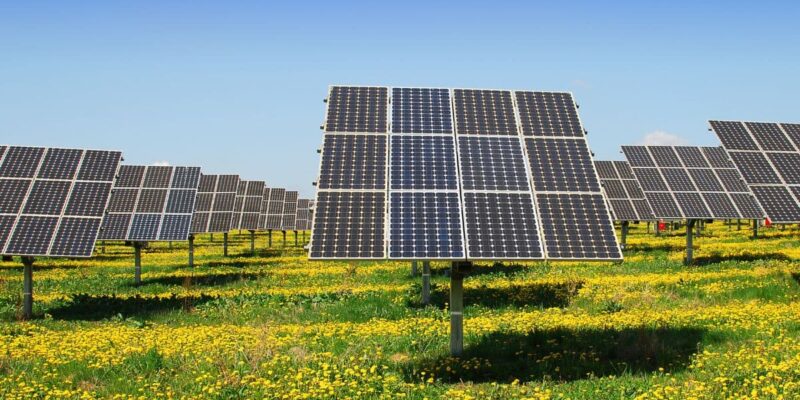
A landowner who wants to lease acreage to a solar developer is exercising a right. So is the neighbor whose cattle still have to graze, whose fences still have to hold, whose ditches still have to drain after a Gulf rain, and whose children still have to live next to what is, in plain language, an industrial generating facility. Calling it a “farm” does not make it one. It is acres of glass, steel, inverters, fencing, and transmission. It belongs in the conversation with plants and substations, not with soybeans.
We should also tell the truth about why some landowners are listening. This moment did not arrive overnight. Timber markets have been struggling. Mills have tightened, some have closed. Prices have not kept pace with the cost of holding land, paying taxes, and waiting on a harvest. When the traditional uses of a tract—cattle, timber, cane, hay—stop paying what a family needs them to pay, a twenty-year solar lease starts to look less like a crusade and more like a lifeline. That is not greed. That is math. People are being pushed toward panels because the markets they used to rely on are weak, not because every rural parish suddenly decided industrial solar was the highest calling of Louisiana soil.
That is a precarious place for a landowner to stand. It is also a dangerous place for a state to leave him, then act surprised when he signs.
The better answer is not for Baton Rouge to pick winners and losers. Government does its best work at arm’s length: a level field, clear rules, no thumb on the scale for the industry with the slickest lobby. What the state can do—without building a new patronage machine—is help traditional markets work again. Encourage the use of wood and wood by-products. Keep mills viable. Support building with lumber, using residuals, and treating the forest as a working crop instead of a leftover. If timber pays, fewer families will feel forced to fence off a generation of ground for glass. If timber stays sick, solar will keep arriving as the only bid in the room.
Louisiana is already learning the placement fight the hard way. Parishes from Cajun Country to Calcasieu to Iberville have seen neighbors show up by the hundreds because they were told late, shown little, and asked to accept a landscape change that lasts a generation. Discussions are going on now in western Louisiana. Some landowners see tuition money and tax revenue. Cattle producers and rural families see a wall of panels, lost agricultural cohesion, and a drop in the kind of property value that does not show up in a developer’s slide deck. Both can be telling the truth at the same time. That is why setbacks, notice, drainage rules, decommissioning bonds, and agricultural-land screens are not “anti-solar.” They are how a free people keep one man’s lease from becoming another man’s taking.
The second warning is about the product itself.
Solar can add power. It cannot, at this time, replace the power that keeps a town, a parish, or this state running when the sun goes down, clouds roll in, or a summer peak hits after dark. Utility-scale solar in Louisiana produces electricity only a fraction of the hours in a year—on the order of one hour in four. Natural gas and nuclear plants in this state run far more of the time because they can be dispatched. That is not ideology. That is how a grid works.
A megawatt on a nameplate is not a megawatt in the socket. A solar field rated at hundreds of megawatts still goes quiet at night. It weakens in weather. It needs the very “traditional” plants critics want to retire—gas, nuclear, and the transmission behind them—to keep hospitals, water plants, refineries, and air conditioners alive. Treat solar as an augmentation and it can have a place. Treat it as a substitute for firm power and you are writing a promise the physics will not keep.
There is also the land. Utility-scale solar is hungry for acres. Five to ten acres per megawatt is a common range. That is a lot of pasture and timberland to fence off for a source that still needs a second source standing behind it. Louisiana does not have infinite prime ground. Cattle, timber, cane, and rice are not lifestyle accessories. They are the working countryside. Once a solar lease covers a tract for twenty or thirty years, that ground is no longer in the ordinary rotation of a farm or forest economy. Young producers who need to rent land feel that first.
None of this requires denying that panels make electricity, or that a rooftop array on a barn can cut a bill. It requires telling the truth about scale. A nation, a state, or a municipality that bets its reliability on weather-dependent generation without massive storage, new transmission, and firm backup is not being green. It is being careless.
So here is the clarion call: Protect property rights on both sides of the fence. Do not punish the landowner who is staring at a weak timber check and a strong solar offer. Do not abandon the cattleman next door. Do not let a solar lease become a quiet way to industrialize rural Louisiana without the rules we would demand of any other plant. Strengthen the markets we already have—wood and wood by-products especially—so families are not herded into one option. Use solar where it helps. Do not pretend it can carry the load that gas, nuclear, and dispatchable power carry today.
Louisiana should harvest the sun where it makes sense. It should not pave the pasture, or the pine woods, because we failed to keep traditional land uses standing. And it should not gamble the grid on a source that clocks out when the lights are needed most.
Representative Chuck Owen is a member of the Rural Caucus, the Louisiana Freedom Caucus, and the Republican Delegation. He is a native of Vernon Parish and represents District 30—which includes portions of Beauregard and Vernon. Owen sits on the House Appropriations, Education, and Judiciary Committees and Chairs the House Special Committee on Military & Veteran Affairs.
Advertisement
Advertisement
