
Editor’s Note: a guest post by Derek Babcock, LAGOP Chairman
For years, Louisiana families heard the same news: another company gone, another premium up, another home or small business hanging by a thread. That was not a talking point. It was a market collapsing in slow motion.
Before Jeff Landry was elected Governor, the private property-insurance market had already cracked. After Hurricanes Laura, Delta, Zeta and Ida, 11 insurers were declared insolvent between July 2021 and September 2022. Other companies withdrew or stopped writing new homes. Combined, the insolvencies and exits hit roughly 205,000 policyholders. The former Insurance Commissioner called it the worst homeowners insurance market since Hurricanes Katrina and Rita.
Louisiana Citizens, the insurer of last resort, went from 35,670 policies covering $6.7 billion in January 2021 to 112,035 policies covering $33.3 billion by August 2022, and later peaked near 140,000. In 2022, the state approved an average 63 percent residential Citizens rate increase for 2023. Claims and premium refunds paid by the Louisiana Insurance Guaranty Association after company failures soared from about $4.8 million in 2020 to $268.1 million in the first eight months of 2022.
That is the wreck that Governor Landry inherited and the one he set out to reverse.
The hole was deep. Homeowners insurance is still too high for too many families, especially along the coast. And commercial auto remains difficult. But pretending nothing has changed would be as dishonest as pretending the crisis was invented in 2024. The Governor did not cause the collapse. He walked into it, changed the rules, and started pulling the market back toward working families.
Now the numbers are finally moving his way.
In September, Property Insurance Company of America offered private coverage to about 5,100 commercial policies currently in Citizens. Governor Landry said those premiums would run 15 to 40 percent lower. Businesses are not being forced out of the last resort. They now have another choice.
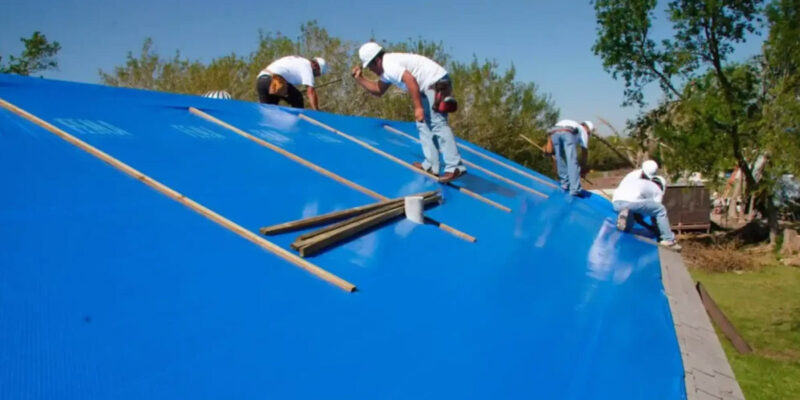
Days later, the Governor and Insurance Commissioner announced an additional $20 million in fortified roof funds from U.S. Department of Housing and Urban Development for the Restore ROOF program. This, along with the $50 million in remaining Hurricane Katrina and Rita bond funds and the $30 million appropriated by the Legislature, brings a total of $100 million to Louisiana’s fortified roof program to make our state’s homes more resilient.
New benchmarks taking effect no later than January 2027 require discounts on the hurricane portion of premiums for qualifying fortified homes. In South Louisiana, those benchmarks range from 29 percent for fortified roof to 49 percent for fortified gold.
Stronger homes. Lower risk. More competition. More choices.
That is the test that matters to a family making a mortgage payment: Are we building a market where companies compete for Louisiana customers, or one where customers hunt for someone willing to write a policy?
There are encouraging signs. Private-passenger auto premiums fell an average of 5.8 percent in 2025 – more than $340 million statewide. Progressive secured average cuts of 6.6 percent for more than 270,000 policyholders and 4 percent for nearly 200,000 more. State Farm cut average rates 5.9 percent for more than one million Louisiana drivers and announced $136 million in dividends for qualifying customers. By June, the Insurance Commissioner said 40 companies had filed personal-auto rate decreases over the prior year. Rate decreases that once seemed impossible are appearing again.
There is important context, and it does not diminish the turnaround. Fewer accidents helped drive some auto decreases, and homeowners rates have not fallen off a cliff. But the direction is changing.
After years of companies leaving and families eating the bill, Governor Landry and Republican legislators changed the rules so insurers compete for customers instead of treating Louisiana as a write-off. Auto rates are showing progress. Property is harder and slower. That is not a reason to stop; rather, it is a reason to keep pushing until all Louisiana families feel the difference. Nineteen new insurance companies started the process of entering Louisiana.
More competition. More capital. Stronger roofs. A legal and regulatory climate that can sustain an insurance market. That is how Louisiana starts to dig out.
Leadership is not waiting for the last expensive renewal to disappear before recognizing progress. Governor Landry inherited a collapsing market and set out to bring competition back. Today, Louisiana can point to lower auto rates, new insurers entering the market, and more policies moving out of Citizens.
That is progress worth recognizing and a reason to keep pushing until all Louisiana families feel it on their homeowners policies, too.
Advertisement
Advertisement
