
Over the past several months, I’ve been sounding the alarm about a troubling, race-based budget objective buried deep in Louisiana’s Higher Education Executive Budget over the past few years. As we’ve discussed previously, this budget objective explicitly defines “underrepresented minorities” as students of “all races other than White, Asian, non-residents, and unknown/not reported.”
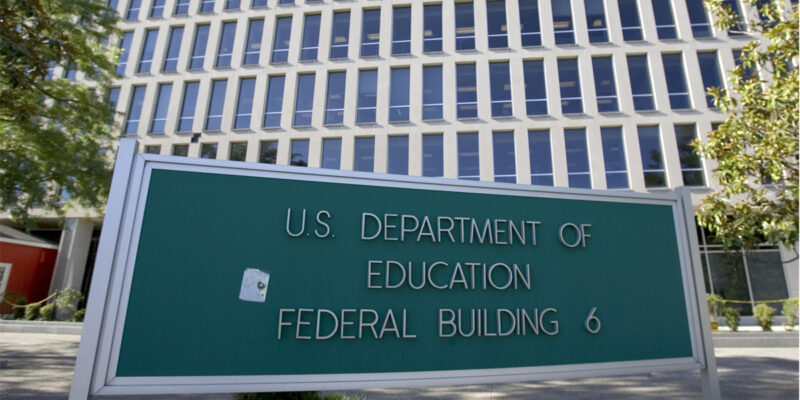
In September 2025, I documented the far-left rot embedded in the Board of Regents’ discriminatory budget objective. In January 2026, I called explicitly for a full audit of how public dollars were being spent to advance that discriminatory goal. Then in March 2026, the U.S. Department of Education’s Office for Civil Rights announced an investigation into the Louisiana Board of Regents for potential Title VI violations concerning this budget objective.
What started as an exposé of a single line item deep in a state budget document has escalated into a federal civil rights investigation over the span of several months. Fortunately, one Louisiana legislator has picked up the baton in the 2026 legislative session concerning this topic.

Rep. Carlson’s HR 80 directs the Louisiana Legislative Auditor to conduct a comprehensive fiscal audit of all state and federal funds expended by the Board of Regents, the LSU Board of Supervisors, the Southern University Board, the University of Louisiana System Board, and the Community and Technical Colleges Board–as well as every public college and university under their jurisdiction.
This audit will specifically trace dollars spent in furtherance of the “underrepresented minority completers” objective embedded in state budget documents from Fiscal Year 2021-22 through Fiscal Year 2025-26.
HR 80 demands that auditors identify and quantify staffing costs for positions tied to administering this objective, programmatic expenditures on recruitment and retention initiatives prioritized by racial status, technology and vendor contracts used to collect race-classified completion data, performance-based funding payments tied to progress toward the objective, and any federal grant money conditioned upon its advancement. The resolution requires that the LLA’s written report be submitted to the Louisiana Legislature “no later than 90 days before the 2027 Regular Session.”
For years, Louisiana’s higher education bureaucracy has operated in relative opacity. The Board of Regents, under the leadership of Commissioner Kim Hunter Reed — a committed DEI advocate — helped normalize the idea that a state budget document could openly instruct public institutions to deprioritize White and Asian students in completion metrics and call it an equity initiative.
As documented in my previous articles, this objective first appeared in the FY21-22 executive budget and was quietly renewed every year since, filtering down from the Board of Regents into institution-level objectives across numerous public universities and technical colleges statewide.
An unknown amount of state dollars has flowed in pursuit of that objective — salaries, scholarships, recruitment contracts, data infrastructure, outside consultants, academic resources, and more — and Louisiana taxpayers have been funding it without knowing the price tag. HR 80 changes that.
In its investigation announcement two months ago, the U.S. Department of Education already claimed that the Board of Regents’ budget objective “appears to blatantly violate not only America’s anti-discrimination laws, but our nation’s core principles.”
However, the federal investigation moves at Washington’s pace and answers to Washington’s priorities. Louisiana’s legislature has its own tools, its own auditor, and its own constitutional obligation to oversee how public funds are spent.
Representative Carlson has taken an important step forward with HR 80, and our hope is that his Republican colleagues in the Legislature will recognize it for what it is: a targeted, fiscally responsible tool to deliver the transparency Louisiana taxpayers deserve.
This is not a hard call. HR 80 does not propose new law, new penalties, or new bureaucracy. It simply says: we appropriated public funds, we want to know exactly how much went to this specific objective, and we want an independent audit to tell us. Every Republican in Louisiana should be signing on, and the House leadership should be moving this resolution forward with urgency.
For years, Louisiana’s Board of Regents has operated without serious legislative scrutiny as to how DEI-adjacent spending was structured and justified. The federal investigation is a significant development, but Louisiana’s legislature answers to Louisiana’s taxpayers.
“Louisiana First” patriots didn’t just ask for transparency in higher education spending. They earned it through months of documented reporting, public pressure, and persistent demand. Now there’s a resolution on the floor that can actually deliver it.
The Louisiana Legislature owes it to Louisiana citizens to pass HR 80 this session.
Advertisement
Advertisement
