
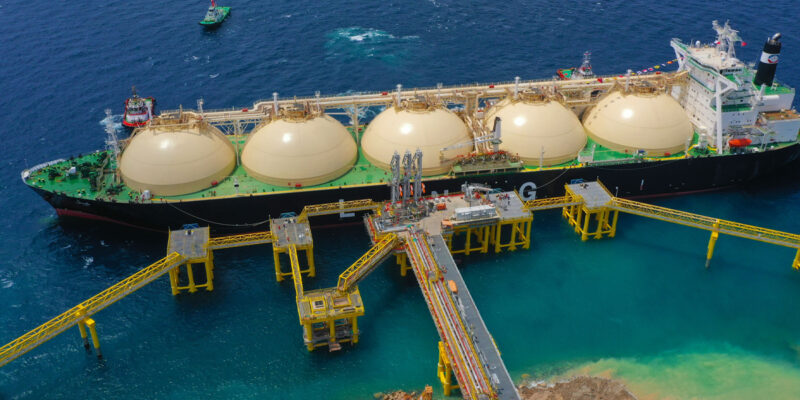
(Alton Wallace, The Center Square) – Federal regulators have issued a Final Environmental Impact Statement for Cheniere Energy’s proposed expansion of the Sabine Pass terminal in Louisiana, a project that could add a massive 19.5 million tons of production at the nation’s largest liquified natural gas export plant.
Houston-based Cheniere, which now produces about 30 million tons of LNG a year at the Cameron Parish export facility, seeks to construct three new liquefaction trains and build a 55.6-mile pipeline system that would be fed by gas fields in Louisiana and Texas.
The Federal Energy Regulatory Commission determined the Sabine Pass Stage V expansion would result in “limited environmental effects” that are mostly temporary or short-term during construction. Cheniere and its contractors are required to minimize these environmental effects to “less-than-significant levels” through specific mitigation measures.
Previously, the federal regulator concluded in a draft review released in April that the eastern black rail, a federally threatened marsh bird that nests along the Gulf Coast, is “likely to be adversely affected” by the expansion project.
Environmental groups like Healthy Gulf have objected to the expansion project, citing the long-term impacts of Cheniere’s Sabine Pass combined with other large-scale industrial facilities on Louisiana’s coastal wetlands and marine ecosystems.
The number of LNG carriers sailing through the Gulf of Mexico and Sabine Pass Ship Channel would surge from 580 to 740 per year if the project is completed, according to the regulatory filing.
Consumer interest advocates such as Public Citizen and the Industrial Energy Consumers of America formally protested the Sabine Pass Stage V expansion project, arguing that exporting large volumes of natural gas produced in the United States to overseas markets reduces domestic supply, increasing utility bills for American households.
According to Cheniere’s application, the company expects to begin construction in late 2026 and to start initial operations by 2030.
Advertisement
Advertisement
