
After perhaps a record-breaking congressional contest turnout of Louisiana black Democrats in 2026, that mobilization would have to improve even on those unprecedented gains for Republicans not to capture the final two congressional seats up for grabs nationally this election cycle.
Final numbers showed a significant uptick in black and Democrat turnout in the state’s midterm elections. Using the U.S. Senate vote as a proxy, in 2026 the turnout gap between Republicans and Democrats shrank 9.6 percentage points from the 2022 Senate race to leave the GOP at just 3.1 percent more and in terms of race the gap fell 12.3 percent leaving white turnout only 2.4 points higher than black turnout.
This helps to explain much of why winner Republican Rep. Julia Letlow got by with a less than two percent winning margin. Even as whites outnumber blacks 2:1 in registration, blacks vote much more monolithically for Democrats than do whites for Republicans, so Democrats can win if both Democrat and black turnout (which are moderately related as blacks comprise more than half of Democrats’ registrations) match that of whites and Republicans’. Also working against Letlow’s candidacy was all other registrant turnout rose 5.1 percent, which usually is a sign of dissatisfaction with the party in the White House and so they disproportionately voted against her.
Whether this translates to Democrats winning the Fifth and Sixth Congressional District runoffs seems much less certain. The Fifth’s turnout saw the same trends, only not as exaggerated. By contrast, for the Sixth those were more exaggerated than statewide, where in fact Democrat turnout proportionally nearly exceeded that of Republicans and blacks turned out four points higher than did whites. (Each of the 2026 districts are somewhat different geographically from their 2022 versions, but as a whole largely the same.)
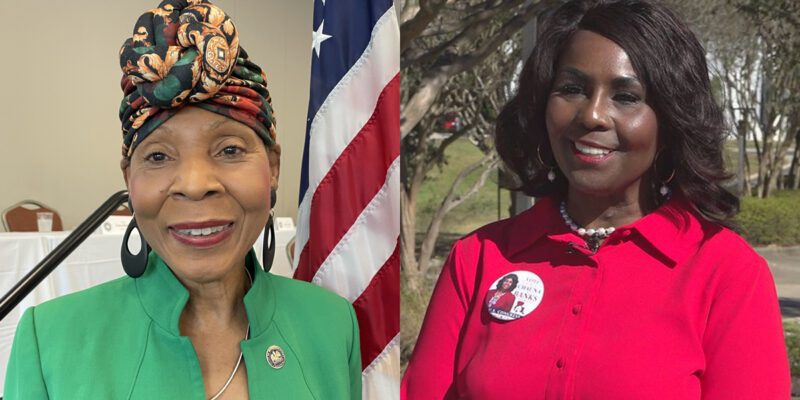
However, whatever atypical advantage Democrats had in the Sixth likely washes away in December. That race nearly came to an all-Republican runoff, but the Democrat who pushed GOP state Sen. Rick Edmonds out of the runoff, former East Baton Rouge Metro Councilor Chauna Banks, was avoided assiduously by Democrat regulars because of her support for both pro-life and pro-woke sentiments because the former is anathema to the party and the latter is too inconvenient in a district where blacks make up just a quarter of the electorate and Republicans hold a 40-31 percentage point lead in registrants.
As well, Banks has little money (even if the state party helps her) while her Republican opponent state Sen. Blake Miguez has millions to prod his natural majority in the district to vote for him. Even with everything going right earlier this month for Democrats, Republican candidates still drew 57 percent of the vote in what should be a better environment than in the runoff.
Democrats have a stronger candidate in the Fifth District’s state Rep. Pat Moore (who the party endorsed then unendorsed now seemingly endorsing again, flipping originally perhaps she also is pro-life) whose resource disadvantage to Republican state Rep. Gabe Firment is far more modest. But the differentials between 2022 and 2026, to remind, ran behind the state’s and, in an effect also pertaining to the Sixth, without a (well-funded) black Democrat running for Senate those differentials should shrink as well. Thus, the weaker demographic position Moore finds herself in – about the same distributions by party and race but with a base not as easily activated relative to Firment’s – will hamper her chances as well in a race where Republicans garnered 62 percent of the vote.
In other words, quite an overperformance in both districts, to even a greater degree than that on Nov. 3, is needed on Dec. 12 for either Democrat to win, and in an environment more difficult to achieve. That scenario seems unlikely, so likely Louisiana will become the vanguard to Republicans repairing the damage from events earlier this month.
Advertisement
Advertisement
