
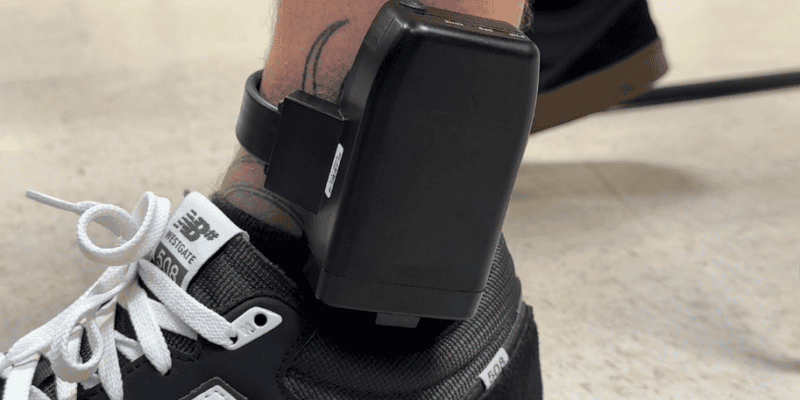
(The Center Square) – As Gov. Jeff Landry weighs more legislative manuevers on New Orleans’ criminal justice system, a departing ankle-monitoring provider is offering him support.
The Assured Supervision Accountability Program, which recently ended a two-year electronic-monitoring pilot in Orleans Parish, unleashed a series of accusations against the local judiciary on Friday. The organization called for three Criminal District Court judges to be investigated for malfeasance and urged Landry to summon lawmakers back to Baton Rouge.
The demand comes days after Landry publicly raised the prospect of a special session aimed at giving the state greater “control” over New Orleans’ courts. His comments followed the collapse of a criminal case against Attorney General Liz Murrill and continued a broader push by Republican state officials to restructure institutions they contend have failed to hold violent offenders accountable.
The organization accused Judges Angel Harris and Leon Roche and Chief Judge Tracey Flemings-Davillier of decisions or inaction that allowed defendants to commit additional crimes while awaiting trial.
Harris “should be investigated for malfeasance,” ASAP wrote, alleging she allowed a defendant accused of violent armed robbery to leave jail without supervision and later move to Utah.
The organization blamed Roche for failing to respond to monitoring violations involving a defendant later linked to a French Quarter mass shooting that killed one person. It accused Flemings-Davillier of failures that preceded the carjackings of three Uber drivers.
“When judges cause a carjacking spree, and then attack the one entity that exposed the truth … the judges should be looked at closely,” the organization wrote.
Those are allegations from the provider, not findings by a court, law enforcement agency or disciplinary body. ASAP’s posts did not include complete case records establishing that the judges violated criminal law or that any single judicial decision directly caused the later crimes.
Still, the accusations strike at the center of an intensifying debate in New Orleans: When a defendant released before trial violates the conditions of release, who is responsible for making the system respond?
Advertisement
ASAP describes electronic monitoring as a “digital jail” — a layer of supervision that allows defendants to remain outside the Orleans Justice Center while their locations and movements are tracked. Under the system, the provider reports suspected violations to the court, which then decides whether to alter the defendant’s release conditions or issue another order.
But according to the post, Orleans judges ignored 45 violation reports over 60 days in one case and accused court officials of retaliating against ASAP after its records exposed weaknesses in judicial supervision. It also credited its tracking data with helping investigators solve cases involving Tyree Quinn, Nicholas Miorana, Ja’Maarion Banks, Eddie Rodrigue and Matthew Allen.
The organization ended its Orleans Parish pilot on Aug. 1 after providing monitoring and investigative assistance through a partnership with ComplyWise Technologies. ASAP has said the program once monitored as many as 400 defendants, though participation had fallen substantially by the time it withdrew.
Louisiana law does impose duties on monitoring companies. Providers must rapidly notify the court, prosecutors and law enforcement after verifying certain events, including tampering, loss of communication or entry into a prohibited area. Courts must also record information about the monitoring arrangement.
But judges retain discretion over what happens after a violation is reported, creating the very accountability gap ASAP says its pilot exposed.
Advertisement
Advertisement
