
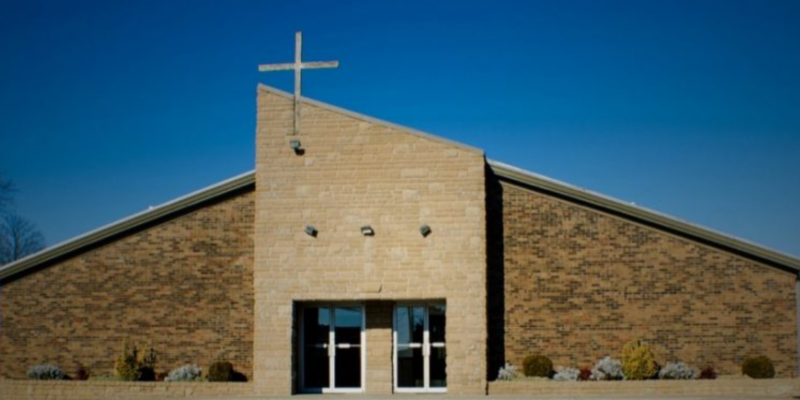
(The Center Square) – Louisiana’s tax code contains a sales-tax exemption for certain purchases by churches and synagogues, but the state says the provision cannot be used because of a federal court injunction that has remained in effect for two decades.
The unusual status of the exemption is part of a broader patchwork in Louisiana tax law that generally requires churches and other nonprofits to pay sales tax while providing exemptions for certain organizations, activities and purchases.
The Louisiana Department of Revenue confirmed Wednesday that churches and synagogues cannot claim the exemption under R.S. 47:305.13 for Bibles, songbooks and literature used for religious instruction.
“Although R.S. 47:305.13 remains in the Louisiana Revised Statutes, churches and synagogues may not presently claim the exemption, and purchases that are otherwise subject to sales and use tax remain taxable,” Revenue Public Information Director Byron Henderson told The Center Square.
Louisiana does not provide a general sales or use tax exemption for purchases made by churches based solely on their religious or federal 501(c)(3) status, according to department.
Churches instead must pay sales and use taxes on purchases unless a specific exemption or exclusion applies to the transaction.
The same basic rule applies more broadly to nonprofits. Federal tax-exempt status does not automatically exempt an organization from Louisiana sales taxes. The Revenue Department says nonprofits are not automatically exempt and the department does not issue a general sales-tax exemption number simply because an organization has nonprofit status.
Louisiana lawmakers have instead created exemptions tied to particular organizations, missions, purchases or activities.
Some of those exemptions are available to religious organizations. Under R.S. 47:305.14, qualifying nonprofit religious organizations, along with civic, educational, historical, charitable and fraternal organizations, can receive an exemption for sales of tangible property, admissions and parking associated with certain fundraising events when the proceeds are used for qualifying purposes.
That exemption, which lawmakers restored in 2025 after it was repealed during the 2024 tax overhaul, applies to the organization’s sales at qualifying events. It does not exempt the nonprofit from paying sales or use tax on its own purchases.
Other exemptions are tied to specific nonprofit missions. Louisiana law provides exemptions for certain sickle-cell disease organizations, Habitat for Humanity affiliates and qualifying child advocacy organizations. A separate provision exempts sales of toys to qualifying nonprofits whose sole purpose is donating toys to minors.
“Sales and use tax exemptions are matters of legislative policy,” Henderson said. “The Department administers exemptions enacted by the Legislature.”
The church exemption has been tangled in federal litigation for more than two decades.
A federal court in 2002 initially blocked enforcement of Louisiana sales-tax provisions benefiting certain religious organizations. The 5th U.S. Circuit Court of Appeals later concluded the federal district court lacked jurisdiction under the Tax Injunction Act and did not decide whether the exemptions themselves were constitutional.
The issue returned to federal court, and in April 2006 the U.S. District Court for the Eastern District of Louisiana issued a preliminary injunction in New Orleans Secular Humanist Association Inc. v. Bridges barring enforcement of several sales-tax exclusions for religious organizations.
LDR responded with Revenue Information Bulletin 06-022, telling churches and synagogues they could no longer claim the exclusion for Bibles, songbooks and religious-instruction literature and would have to pay sales or use tax on otherwise taxable purchases.
“Unless and until the judicial injunction is lifted, these exclusions cannot be claimed,” the department said in the 2006 bulletin.
The exemption nevertheless remained in Louisiana law.
Historical state tax records show the exemption once had a measurable fiscal impact. Louisiana estimated it would reduce state revenue by about $600,000 in fiscal year 2006, with the estimate increasing to $624,500 in later years. State records subsequently listed the exemption as suspended following the federal litigation.
Nearly two decades later, lawmakers undertook a sweeping rewrite of Louisiana’s sales-tax system during the 2024 third extraordinary session.
Act 11 reorganized numerous sales-tax exemptions and exclusions, carrying the religious-material provision into the revised tax code as R.S. 47:305.13.
But moving the provision did not make it enforceable.
“Although the exemption was reenacted in 2024, the federal injunction remains in effect and prohibits LDR from recognizing or enforcing the exemption,” Henderson said.
The Revenue Department said the provision remains in Louisiana law because lawmakers have not repealed it.
The department would not take a position on whether Louisiana could adopt a broader sales-tax exemption for churches under a different statutory structure.
Texas, for example, allows qualifying religious organizations to obtain sales-tax exemptions for purchases related to their exempt purposes. Other states bordering Louisiana generally take a more restrictive approach, with Arkansas, Mississippi and Alabama generally taxing church purchases while providing various limited exemptions.
Louisiana has considered broader relief before.
In 2005, lawmakers considered legislation that would have phased in a broad state sales-tax exclusion for sales or purchases by churches. The measure cleared the House but did not become law.
A similar proposal returned in 2007 but also failed to become law.
Advertisement
Advertisement
