
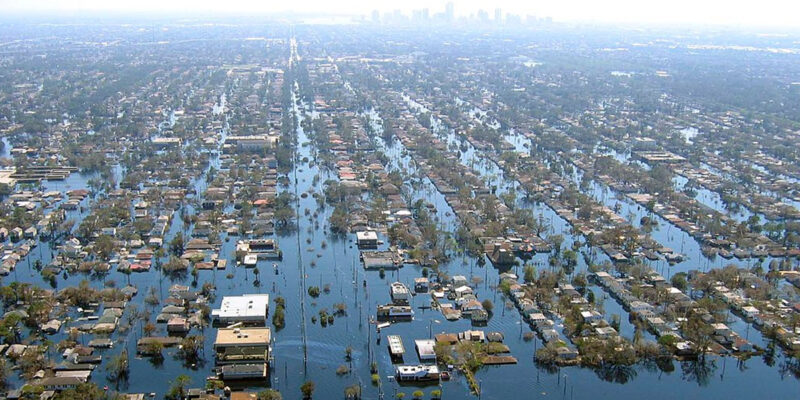
With all the excitement about the recent Tulane report that says that within 200 years the Louisiana coastline, including New Orleans, will be submerged I have a couple of thoughts. First, I have no reason to doubt the conclusions in the study, nor the intent of the academics, but I would add that much can happen in two centuries.
It’s inevitable that New Orleans and much of coastal Louisiana will eventually be taken over by the Gulf, according to a new Tulane University study.
Researchers say the question is not whether the coastline will keep moving inland, but how the state plans for it.
“Ultimately, the main message of the study is New Orleans is not forever and we have to plan for our future and we have to start planning now,” said Dr. Torbjörn Törnqvist, a geology professor at Tulane University and lead author of the study.
The study, published in the journal Nature Sustainability, argues Louisiana’s land loss, shoreline retreat and coastal population shifts could make the state a leader in climate adaptation planning.
Tulane said the research combines coastal geology with archaeology, demography and public policy.
One of the study’s key findings goes back about 125,000 years, when researchers say the Gulf reached an ancient shoreline north of Lake Pontchartrain, roughly 30 miles north of New Orleans.
Tulane said global temperatures at that time were about 0.5 to 1.5 degrees Celsius warmer than preindustrial levels, and sea levels were 10 to 20 feet higher than today.
Tornqvist said that because of the increasing rate of sea level rise, combined with subsidence or the rate of sinking land, the Gulf will one day reach that ridge again, putting much of Southeast Louisiana underwater.
That being said, I suggest that instead of panic that splashy headlines intend to evoke we look to technology. A hundred years ago the same predictions were made about the Netherlands, but the Dutch saw the value in saving their cities and lands and they built water control facilities that ever since have kept the Northsea at bay. The US, if so inclined, is far better able to use technology to protect New Orleans from the sea than the Dutch were then.
My final thought refers to the above comment “if so inclined”. For America to want to save New Orleans the people of America must view it as economically valuable enough to expend the massive cost to do so. American taxpayers will be loath to save a New Orleans culture, but they would positively respond to saving a city viewed as being an irreplaceable component of the American economy.
The message that our leaders must respond to is not that geology threatens, but that we must make our city so economically valuable to the American people that they will be willing spend a fortune to protect it.
Advertisement
Advertisement
