
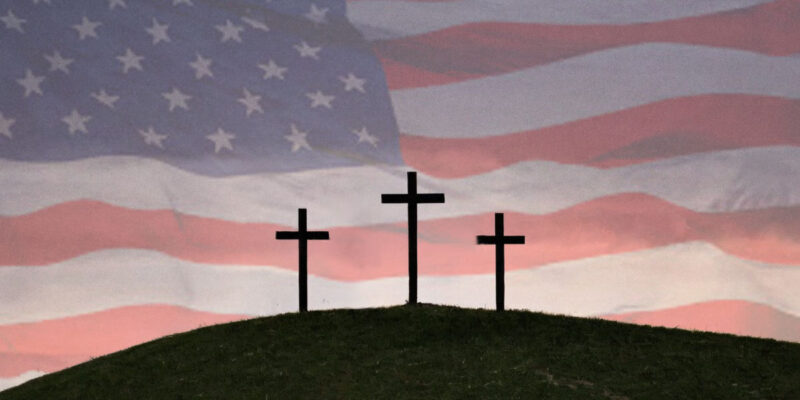
Every nation eventually reaches a point when it must look honestly at itself and ask a difficult question: Are we still producing the kind of fruit that justifies the blessings we have received?
More than 2,700 years ago, the prophet Isaiah delivered a warning to the nation of Judah. He compared the people to a vineyard that had been carefully planted and faithfully cultivated. The owner selected fertile ground, cleared away the stones, planted the finest vines, built a protective tower, and prepared a winepress. Nothing necessary for the vineyard’s success had been withheld.
Yet when the owner came looking for good grapes, the vineyard produced wild, rotten, and worthless fruit.
God then asked:
“What could have been done more to my vineyard, that I have not done in it?”
—Isaiah 5:4
Isaiah was speaking directly to ancient Judah, not to the United States of America. America is not Israel, and Isaiah 5 should not be carelessly treated as a direct prophecy about our country.
However, the moral principles contained in the chapter are timeless. Human nature has not changed. The sins that destroy individuals and nations remain largely the same: greed, self-indulgence, pride, moral confusion, corruption, injustice, and the rejection of God.
When we look at the conditions Isaiah described, it is difficult not to see troubling similarities in the United States today.
A Nation That Has Been Greatly Blessed
Few nations in history have received the opportunities and advantages enjoyed by the United States.
America was established on principles of ordered liberty, representative government, individual rights, religious freedom, and equality under the law. Although our country has often failed to live up to those principles, the principles themselves have provided the means for correction, reform, and progress.
America has been blessed with abundant natural resources, vast farmland, navigable rivers, productive industries, military security, technological innovation, and economic opportunity. We have produced advancements in medicine, agriculture, communication, transportation, and science that have benefited people throughout the world.
Millions have come to America seeking freedom and a better future. Many arrived with little more than faith, determination, and the willingness to work.
Like the vineyard in Isaiah’s song, much has been placed into our care.
The question is not whether America has been blessed.
The question is whether we have been faithful with those blessings.
The Fruit God Expected
Isaiah explains that God looked upon His vineyard expecting justice and righteousness. Instead, He found oppression, bloodshed, and cries of distress.
God had not blessed Judah merely so its people could become wealthy and comfortable. He expected them to become a just, righteous, and faithful society.
The same principle applies to every nation. Freedom is not merely permission to do whatever we please. Freedom carries responsibility. Prosperity is not simply something to consume. It is something to steward. Power is not given merely for self-interest. It should be exercised with justice and restraint.
America’s strength has never rested only in its military, economy, or technology. Our greatest strength has traditionally been found in the character of our people: faith, family, personal responsibility, courage, hard work, compassion, and respect for the law.
When those qualities weaken, no amount of government spending, political campaigning, or technological progress can fully replace them.
When Greed Replaces Stewardship
Isaiah’s first “woe” was directed toward those who joined house to house and field to field until there was no room left for anyone else.
The issue was not simply owning property or achieving success. The problem was accumulation without justice. Powerful people were using their influence to take advantage of the weak and deprive families of their inheritance.
There is nothing wrong with prosperity honestly earned. A free society should reward work, creativity, saving, investment, and responsible risk. But prosperity becomes destructive when wealth is separated from responsibility.
Today, too many decisions are made solely on the basis of profit, power, or political advantage. Families are treated as economic units. Communities are viewed as markets. Human beings are reduced to statistics, consumers, voters, or sources of revenue.
Government itself can become greedy, constantly expanding its authority, spending money it does not have, and transferring crushing debt to future generations.
Corporations can become greedy when they abandon long-term responsibility for short-term profit.
Individuals can become greedy when they believe that happiness consists only in having more.
A nation cannot remain healthy when everyone is asking, “What can I get?” while fewer people are asking, “What is right?”
When Pleasure Replaces Purpose
Isaiah next condemned those who rose early to pursue strong drink and continued partying late into the night. Their lives revolved around entertainment, pleasure, and intoxication, while they gave no thought to the works of God.
There is nothing sinful about wholesome recreation. People need rest, celebration, music, laughter, and enjoyment.
The danger begins when entertainment becomes the central purpose of life.
America has become a society of almost unlimited distraction. We carry entertainment with us every waking hour. We can watch, listen, scroll, gamble, purchase, and consume almost endlessly.
Yet despite having more entertainment than any previous generation, many Americans report feeling lonely, anxious, angry, and without purpose.
We are constantly connected electronically but increasingly disconnected personally. Families may sit in the same room while every person is staring at a different screen. Public debate has been reduced to slogans, insults, and short video clips. Serious issues are often judged by whether they are entertaining rather than whether they are true.
A nation that loses its sense of purpose eventually loses its willingness to sacrifice. Citizens begin to demand benefits without duties, rights without responsibilities, and comfort without work.
No civilization can sustain itself on pleasure alone.
When Evil Is Called Good
Isaiah gives perhaps his most recognizable warning:
“Woe unto them that call evil good, and good evil; that put darkness for light, and light for darkness.”
This describes more than ordinary wrongdoing. Every society contains people who do wrong.
Isaiah describes a deeper stage of decline: the reversal of the moral order itself.
It is one thing for a person to commit a wrong act while admitting that it is wrong. It is something far more dangerous when a society begins celebrating what it once recognized as destructive and condemning what it once recognized as virtuous.
When truth becomes inconvenient, language is changed to conceal reality. When standards stand in the way of desire, the standards are redefined. Those who object are often mocked, silenced, or labeled as hateful.
We now live in a culture where many believe truth is personal and morality is determined by feelings. Instead of asking whether something is objectively right or wrong, people are encouraged to ask whether it feels authentic to them.
But a society cannot survive without shared moral foundations.
Freedom requires self-government, and self-government requires self-control. When people refuse to govern their own appetites, government eventually grows more powerful in an attempt to control the resulting disorder.
When Pride Replaces Wisdom
Isaiah also declared:
“Woe unto them that are wise in their own eyes, and prudent in their own sight.”
America possesses extraordinary knowledge. Our scientists can study distant galaxies, develop lifesaving medicines, and place enormous computing power into a device small enough to carry in a pocket.
But knowledge is not the same as understanding, and understanding is not the same as wisdom.
Knowledge means knowing the facts. Understanding means knowing what those facts mean and how they fit together. Wisdom means knowing the right principles and what ought to be done. Discernment means knowing when, where, how, with whom, and to what extent wisdom should be applied.
A nation may possess tremendous knowledge while lacking wisdom and discernment.
Pride convinces each generation that it is more enlightened than all who came before it. It dismisses inherited wisdom, religious faith, tradition, and history as outdated obstacles.
But rejecting the wisdom of the past does not free us from human nature. It merely forces us to relearn old lessons through painful experience.
We believe we can redefine family, morality, responsibility, justice, and even truth without consequences. Isaiah warns that such confidence may not be wisdom at all. It may simply be pride.
When Justice Becomes Selective
Isaiah condemned leaders who justified the wicked for a reward and denied justice to the innocent.
A republic cannot survive without confidence in the rule of law. Citizens must believe that laws are applied fairly, courts are impartial, elections are honest, public officials are accountable, and constitutional protections apply to everyone.
Justice cannot depend upon political party, wealth, race, influence, social status, or personal connections.
When one group believes the law will be used against it while another group will be protected, trust begins to collapse. When prosecutors, judges, legislators, or law-enforcement authorities are viewed as political weapons, respect for institutions disappears.
The answer is not lawlessness. The answer is equal justice.
Law without justice becomes oppression. Justice without law becomes personal vengeance. A healthy nation requires both lawful authority and moral integrity.
The Consequences of Rejecting Truth
In Isaiah 5, judgment did not come because God had failed to care for the vineyard. Judgment came because the vineyard rejected everything that had been provided for its success.
The protective hedge was removed. The wall was broken down. The vineyard was left vulnerable.
Nations often assume that decline will never happen to them. They believe their wealth, military strength, political institutions, or geographical advantages will protect them indefinitely.
History teaches otherwise.
Great nations rarely collapse because they suddenly lose every resource. They decline first from within. Their people lose confidence in their institutions, their families weaken, their debt grows, their leaders become corrupt, their culture abandons restraint, and their citizens become divided into hostile groups.
The external crisis merely reveals the internal decay that has been developing for years.
America is not guaranteed permanent greatness. No nation possesses an unconditional promise of continued prosperity.
There Is Still Hope
The message of Isaiah is not merely one of judgment. Throughout the book, God calls His people to repentance, restoration, and renewed faithfulness.
Repentance means more than feeling sorry. It means recognizing that we are traveling in the wrong direction, turning around, and choosing a different path.
America’s renewal will not come from Washington alone. Political leadership matters, but government cannot repair every broken family, restore every moral conviction, teach every child honesty, or create personal responsibility.
Renewal begins in homes, churches, schools, communities, businesses, and individual hearts.
Parents must teach children the difference between right and wrong. Churches must proclaim truth with both courage and compassion. Schools must educate rather than indoctrinate. Businesses must value integrity as well as profit. Public officials must remember that they are servants, not rulers. Citizens must accept that freedom requires responsibility.
The future of America will be decided not only in elections but also in millions of daily choices.
What Kind of Fruit Are We Producing?
Isaiah’s warning forces us to examine ourselves.
After all the blessings America has received, what kind of fruit are we producing?
Are we producing justice or favoritism?
Truth or deception?
Responsibility or entitlement?
Humility or pride?
Strong families or deeper division?
Faithfulness or rebellion?
Liberty ordered by virtue, or freedom separated from responsibility?
The purpose of asking these questions is not to declare that America is beyond hope. It is to recognize that hope requires honesty.
There is still much that is good in this country. Millions of Americans work hard, raise families, serve their communities, worship faithfully, defend the nation, protect the innocent, care for the sick, and help their neighbors.
Those people are evidence that the vineyard has not been entirely lost.
But we must not mistake God’s patience for approval or continued prosperity for permanent protection.
Isaiah 5 reminds us that blessings carry obligations. A nation that has received much will be accountable for what it does with what it has received.
America stands at a crossroads.
We may continue down the path of greed, pleasure, moral confusion, pride, corruption, and division.
Or we may return to truth, justice, responsibility, humility, faith, and respect for God.
The lesson of Isaiah 5 is not that decline is unavoidable.
The lesson is that decline becomes unavoidable when a people refuse to acknowledge it.
Judgment is possible.
But so is repentance.
And while repentance remains possible, there is still hope for America.
Advertisement
Advertisement
